Pages

Thursday, 7 July 2016

#134 What the Locals Eat - Japan

Having lived in Japan for over a year, I am well versed in the Japanese art of dining out. When travelling I often find it difficult to find one particular restaurant out of millions that Lonely Planet has recommended - so let's be practical. I prefer to eat at chain stores and restaurants that can be found all over the country. Chain stores are easy to find and are plentiful both in Tokyo and across the country, saving you time and effort looking for a little local eatery where they don't speak English and you're completely overpriced.

Colorful chopsticks!
There a few key things you should know before embarking on your Japanese food journey, no matter where you decide to eat. The first, and most important, is this; everyone uses chopsticks and knives and forks are not available. Expecting to find a fork in a Japanese restaurant would be like a Japanese woman coming to Ireland and being shocked when she goes into Super Macs and finds there are no chopsticks. If you can’t use them, watch a few YouTube tutorials before you go, or carry around a fork when you go out for the day. Seriously.

As for language skills, outside the main tourist areas English is usually unavailable, but some menus have photographs and many restaurants have realistic plastic models of the food in the window, so worst case scenario you can always just point at what you want. In Tokyo ticket vending machines are in many restaurants to save time – you simply put in the money, click the picture that looks best, then hand your ticket to staff and your dish is delivered swiftly, without having spoken a word.
Otherwise, many chain stores have an English menu, or in the case of international chains the words have usually been adopted into Japanese and so sound very similar to the English (for example; a “hotto ratte” in Starbucks or a “cheezu baagaa” in McDonalds).

As a final piece of advice, Japan has a lot of unique flavors and varieties of Western foods (such as KitKats) and trying these is always fun, so if you have time pop into a grocery store and see what treasures you can find. Popular variations often include matcha (green tea) and wasabi (like green horse radish).

Below is a list of chain stores that can be found across Japan, as well as the food they serve and the prices to expect.


Breakfast

The Japanese word for breakfast – asa gohan – literally translates as “morning rice”, so there’s no surprise that rice, fish and miso soup are still the most popular choice for Japanese every morning. However, many tourists are shocked to learn the Japanese have a love of bakeries and sweet breads, and these can be a popular choice, especially at weekends.

Vie De France – An affordable chain bakery with everything from sweet churros and croissants to savory curry breads and a kind of bread with bacon and fried egg on top (the Japanese-French take on a breakfast roll?). Breads are around 150yen-350yen with coffee around 300yen.

Dennys – Despite the familiar name the American chain has a very different menu in Japan. However, this is a good place to try some of the breakfast sets including rice and soup (or you could just get the pancakes). The morning select set meals are about 800yen.

McDonalds – While not exactly Japanese, the menu is different to Ireland, with breakfast options such as a Chicken Egg McMuffin and something called a McGriddle, and a side menu of hash browns, apple pies or chicken nuggets. A set meal is about 400yen.


Coffee break

While not exactly known as a nation of coffee drinkers, café chains are very popular in Japan, especially in summer when locals and tourists alike escape the soaring heat and relax with various kinds of iced coffee.

Starbucks - Lovingly shortened to “Su-ta-ba” in Japanese, the notorious chain is possibly even more popular in Japan that it is in America, and there’s one (or two) to be found on every street corner. Unlike their American counterparts they always have some kind of unique seasonal drink limited only to Japan, for example a Cherry Blossom Latte in Spring and a Baked Cheesecake Frapuccino for Summer. Check out the menu when you’re in town to see what’s new. Prices are similar to home at about 500yen (they don’t include tax in their price list so it will be a little more expensive).

Tullys

Mister Donut – Another cultural surprise, the Japanese enjoy donuts. This chain is found in a few parts of Asia and is cheaper and has more selection than Krispy Kreme (although they win when it comes to seasonal decorations). I recommend the Pon De Ring – a unique Japanese kind of squishy donut. Look out for their 100yen sales, otherwise expect to pay around 140yen for a donut and 300yen for coffee (they boast unlimited refills of the delicious café au lait).

Tullys – This is a Japanese coffee chain, similar to Starbucks but with more luxurious drinks, and usually not as crowded. Prices are around 500yen.


Lunch

The Japanese are hard workers and as such keep their lunch breaks to an absolute minimum before returning quickly to work. Japanese lunchtime is at 12.30pm and it’s best to avoid eating at this time as everywhere will be insanely crowded for that one hour. Several restaurants have only a counter with stools to accommodate more solo diners and to facilitate a quick turnaround, so sitting together in groups of more than 2 can be tricky.

Sukiya
Sukiya – This is one of many gyudon chains in Japan, gyudon being a large bowl of rice with slices of marinated beef drizzled on top. While it doesn’t look so glamorous, it tastes good, is served to you within seconds and is probably the cheapest and most filling meal you’re likely to find in Japan. A regular bowl costs around 350yen, with miso soup usually being served free. (Other popular chains include: Yoshinoya, Matsuya).

Mos Burger – This is a Japanese burger chain that is regarded by the Japanese as more healthy and fresher than rival McDonalds – though how true this thinking is, I’m not sure. Regardless the burgers are big and the options are interesting than what you find at home. Try the classic mos cheese burger with a green melon soda and fries. Prices are around 800-1000yen for a set.

7-Eleven – Convenience stores are big business in Japan, opening 24 hours and found on every street. For lunch on the go, pop into any store (options include Lawson, Family Mart, Circle K) and grab some pan (bread) from their extensive collection, or act like a true local and grab an oni giri – a ball of rice covered in a sheet dried seaweed and containing some kind of fish in the middle – my favourite is the tuna mayonnaise. Wash it down with a bottle of Green Tea or a Fanta Grape. Breads and onigiri are around 100-200yen, and drinks are about 150yen.


Snacks

Gindaco – This place sells takoyaki which blatantly are “octopus balls”, but intricately are delicious, piping hot battered balls with a teeny tiny piece of octopus tentacle on the inside, served with tons of seasonings, mayonnaise and various unknown sauces. Be brave and give them a try, you’ll be surprised! A set of 6 is about 550yen.

Vending Machines – There are vending machines on every street corner in Japan, including streets in the middle of the countryside surrounded by nothing but rice fields. Unfortunately, about 98% of these sell only hot/cold drinks (the other 2% selling cigarettes) and to find one with food is a rare occurrence. The upside is that in the cold winter you’re always within reach of a hot tea or coffee, and in summer you can keep constantly hydrated. I recommend a hot can of Boss coffee to wake you up first thing, and an ice cold bottle of Pocari Sweat sports drink to keep you energized throughout the day. Drinks are around 110-180yen.


Dinner

Since Japanese often work late, dinner time is around 6 to 8pm, so it’s best to try get in before them as lines can be long. However, it’s usually more staggered than lunchtime.

Tonkatsu Wako – Tonkatsu is deep fried breaded pork, but you can also get katsu variations of vegetables or seafoods such as prawn. The real star of the dish is the tonkatsu sauce – like a blend of Brown sauce and Worcester but a billion times more delicious. Just trust me. This chain offers formal table service and all you can eat rice, soup and cabbage, but the cheaper and more informal Katsuya chain is just as appetizing. Prices here are around 1,100-1,500yen, and Katsuya is about 600-1,000yen.

Uobei
Uobei – This is one of Japan’s popular kaiten zushi chains where the dishes go round and you take what you like. Modern chains like this now also have a kind of tablet at every seat that allow you to order what you want, which is then freshly prepared and promptly delivered to you on a mini train. They also serve hot dishes like ramen and French fries. All plates (2 pieces of sushi) are 108yen each, expect to eat about 5-10 plates for dinner (although some salary men can eat up to 20+…).

Ippudo – One of the best ramen places, ramen of course being a big bowl full of noodles in a soup, generally topped with bean sprouts and a slice of pork. The trick is to slurp the noodles and soup loudly. A popular side dish is gyoza, similar to a spring roll and best doused in a mixture of vinegars and oils. Ramen is about 800yen while gyoza are about 400yen.

CoCo’s Curry House – If you can’t use chopsticks, this is the place to go. Curry rice is very popular in Japan and is typically found on every menu, regardless of the restaurant focus. As the name suggests it’s always some kind of variation of rice with curry sauce, this would be almost impossible to eat with chopsticks and so is always served with a spoon. CoCo’s has a lot of customizable options including degree of spiciness and ingredients – ranging from cheese to beef to squid. A plate will cost you around 550-800yen.


Sweet Treats

Marion Crepes – The popularity of crepes in Japan is yet another by-product of the Japanese fascination with France. Surprisingly, Nutella is very rarely an option and instead the most popular options include a wedge of cheesecake and a ton of whipped cream. The best place to get one is in Harajuku in Tokyo, where there are about six on the one small street. The basic crepes go for around 300yen, while the cheesecake options are closer to 600yen.

Taiyaki
Baskin Robbins – Known as “31 Ice” in Japan, the chain even has Halloween and Christmas themed ice-cream cups, thanks to the fact most of Japan only starts to get truly cold around December. For a Japanese twist try their matcha and anko flavors. A small double (which is pretty big) is 470yen, and on the 31st of each month it’s 31% off.

Food stalls – Found at temples or festivals and especially populous in Spring and Summer. Classic snacks include tai yaki - a fish shaped kind of waffle filled with custard or anko (sweet red bean), choco banana - a phallic looking banana on a stick covered in chocolate icing (sometimes pink or blue in colour), sprinkles and good for a giggle, kaki gori - a summer specialty consisting of shaved ice and syrup, perhaps best described as the Japanese cousin of a slushy. Expect to pay between 150-350yen for any of the above.


Friday, 1 July 2016

#133 The Complete Guide to Driving in Rural Ireland

Ireland is a very small country, with almost all major cities and towns accessible in less than a 3 hour drive from the capital city, Dublin. There are a few different ways you can get around that I’ve outlined below, but the most convenient way to see all Ireland has to offer is to rent a car and drive! I'm Irish and have grown up in the countryside, so I know all the small things you're likely to encounter here!

Public Transport Across the Country
Bus Eireann at Dublin Airport
Our national bus service, Bus Eireann, can take you almost anywhere between towns and cities across the country, and it is often supplemented on popular routes by private bus services that typically provide a cheaper, more frequent and more direct service.
Our train service, Irish Rail, is more comfortable and can reach some places faster than the bus, but usually the prices are far higher and the frequencies less.
Cities like Dublin, Limerick, Cork and Waterford all have local bus services to take you around, and Dublin is supplemented by the DART train, LUAS light rail, and a bicycle rental system. All our public transport has WiFi, although not always so reliable.
Taxi’s in Ireland are expensive, alright for a quick trip back to your hotel after a late night out, but for journeys much longer than 30mins you can expect to pay upwards of 40euro or more.

Most of the gems in Ireland are hidden in the countryside, an hour’s drive from the nearest small town and way out of the way of bus routes and train lines. Basically, if you want to see Ireland, really see Ireland, you’re going to need a car.

Driving in rural Ireland is not for the faint hearted, but on the scale of things around the world it’s not so difficult either! For starters, we are part of that unique collective that drive on the left, so you may need to adjust to that. Secondly, aside from our main motorways and highways, the road quality usually isn’t the best. You’ll find they are usually narrow with no room to overtake, can be very winding with sharp corners and bends, and potholes are commonplace. Many years ago flooding was prolific with locals simply knowing to avoid a certain road after heavy rain, but in recent years most of these trouble areas have been cleared and appropriate drainage built.
A typical main country road between villages

Driving Carefully and Farmyard Machinery
Locals who know the roads often have no problems going excess speeds, even when the vehicles they’re driving are tractors! While it can be a terrifying experience to see them swerve around a bend on your side of the road – as I said they’re very used to it and will have no problem swiftly swerving back onto their side of the road without giving much notice. Conversely, you should be aware that if you are very nervous and break suddenly at every corner in the road you run the chance of being rammed from behind by local drivers who weren’t expecting any sudden stops, or you could cause them to become annoyed and overtake dangerously. It is courtesy if you are driving slowly and traffic builds behind you (even just two cars!) that you find a safe place to pull in and allow those behind you to clear.
Overtaking on most country roads is hazardous, so if you are stuck behind a farmyard vehicle moving slowly (most of the larger, heavy machinery will be on the roads around August – September depending on weather) please be patient for them to find somewhere suitable to pull in, or if they are being particularly oblivious perhaps a slight beep of the horn could remind them. Large agricultural machinery is very expensive to buy and sometimes used only once a year, so one or two machines can be shared between all the farmers in a village or area. It is their livelihood and they cannot help that the machine needs to be driven on sub-par roads to the next farm, so please understand this.

Farm and Wild Animals
Admittedly, it is very unlikely you will come across one of those classic “Irish traffic jam” scenarios with sheep and cows blocking the road. They’re not moved between fields so often, and even so the distance is usually very short so you won’t be held up long. Beeping or revving your engine will only frighten the animals and cause them to bolt making the job more difficult for the farmer and delaying you longer.
If you come across an unattended farm animal such as a cow or sheep blocking the road, revving your engine or driving very slowly towards them should be enough to scare them out of your path. All farm animals will have a marking or colour spray painted somewhere on them, and it is courtesy to inform a nearby house, shop or pub as they often know the owner by the markings (or will know someone who knows) and will be able to contact them to remove the animal before it causes an accident.
You can occasionally encounter horse riders on the roads, and you should approach slowly and wait for a signal from the riders. In some cases these horses are being trained to get used to traffic, so are likely to panic and bolt if you frighten them by making a loud noise or driving quickly by.
While driving at night you need to be aware of many of Ireland’s nocturnal animals which may dash across the road such as rabbits, foxes, badgers and hedgehogs, or occasionally even an old farmer who is stumbling home after a few drinks in the village pub!

“City drivers”
We have a joke in Ireland about the fact that city drivers (from Dublin usually) can’t drive well in rural areas because they are unused to the narrow, winding roads, and also that rural drivers can’t drive well in the big cities or motorways because they get confused with all the different lanes of traffic.
In Ireland you can tell where a car was bought by the letters in the registration plate – for example D means it’s from Dublin while WX means it’s from Wexford. We sometimes try gauge a drivers competence by looking at this – if you see a nervous/slow/bad driver on a certain road and their registration has the name of a different county, then you can assume they’re not from the area and aren’t sure of the roads. In all likelihood your rental car will have a D registration, so locals may take heed you’re not from the area and give you a wider berth. However, the popularity of second hand cars in Ireland means this isn’t always a reliable way to tell.

Parking and Security
Parking is free in most rural places, but be sure you’re not blocking an entrance or parking inadvertently on private land. In a village, perhaps the most suitable place to park up is the carpark adjoining the local church. Some isolated places such as beaches are targeted by petty thieves (probably teenagers) who hide out and wait for you to leave your car, and then break in stealing your wallet or phone. Even if an area looks empty do not take this to be guaranteed, and either take your belongings with you, lock them in your dashboard or at least hide them from view.
It is beneficial to always have a good amount of petrol in your car. Almost all villages will have some kind of petrol station, but they can be spaced far apart and often their opening hours are limited, maybe 9am to 6pm or even less on a Sunday. Therefore, especially in the evenings, it is better to have a full tank because you could end up stranded somewhere at 9pm, or your journey may be delayed the following morning because you need to wait for a station to open. You also don’t want to take a wrong turn down an unknown country road and end up far from a station running low on petrol!

You know it's rural when there's grass in the middle of the road...

Rural Cycling
While it may seem like a nice idea, generally speaking, cycling in the countryside is dangerous – the roads are narrow and lined with wild hedges that are cut maybe once or twice a year, so often branches and weeds will stick out, liable to knock you off your bike or cause you to swerve into traffic. You also must remember that Ireland is a quite a rainy and windy country, even in summer, so there is no guarantee of fine weather for your trip. Some people do it, but I personally couldn’t recommend it.

Caravans and Camping
Since Ireland is accessible by car ferry from the UK and France, we sometimes get European visitors in camper vans. Basically, the same principals as above apply as regarding narrow roads and driving carefully. You should also be aware that it is illegal to park a campervan or pitch a tent on private land without permission, or not at all on public land such as beaches, woodland or car-parks. Therefore, you must really only use your caravan or tent at designated parks and pay fees. However, if you are only staying one night and will clean up after yourself, I think no one will notice you if you stay at a beach or something, since they are not patrolled so often and usually just respond to reports from the public. But officially it is against the law and you should plan to stay at approved sites.
The reason for these strict rules is that in Ireland we have a group called Travellers (like gypsies) who live in caravans and move from one place to the next. They have a bad reputation for staying in large groups in once place for maybe a few weeks, which can affect people who live in the area or who want to park their cars since there is no space. They also sometimes can leave a big mess behind which is expensive and troublesome to clean. While this is definitely not true of all Travellers, it has happened enough times to sanction these laws.


During your time driving around rural Ireland you may encounter none of the above situations – but they do happen and it is better to be prepared and informed than to panic or become impatient.
Driving in Ireland will take you to hundreds of ancient, unique places that would be otherwise be inaccessible, and it is a quick and convenient way of seeing the countryside. Safe travels!


Friday, 17 June 2016

#132 Preparing to Climb Mt Fuji 2016

EDIT: To read about my climbing experience and for details on the Fujinomiya trail please check out my most current post here.


I currently live in Shizuoka Prefecture, which is the “Home of Mt Fuji” (although part of Fuji also lives in Yamanashi Prefecture too!). Since it’s nearby, I decided I had no excuse not to climb Fuji before I leave this summer.


Getting There

Firstly, there are English language tours for around 20,000yen departing regularly from Tokyo, so if you are a tourist I would probably recommend booking one of those for a totally hassle free climb. However, it’s not difficult to do it yourself, as there are daily buses to/from Tokyo all through the climbing season (check out Willer for bus information)
You can also reach the mountain by getting a Shinkansen to Shin-Fuji station, and from there a 2 hour bus.


When to climb

Fuji is only open from around mid July to early September. This short climbing period means it’s always busy. Weekends and basically most of August (from around 10th to 20th maybe) are particularly crowded, and it’s possible to wait in line to get to the summit, especially at sunrise when lines can become quite long. I’ll be climbing on a Sunday-Monday because of work restrictions, but ideally I’d have liked to climb mid-week.


Night Hiking or Sleeping Over?

l  Many people choose to hike through the night and reach the summit at sunrise. This is officially not recommended as it can cause more accidents since people are tired and sleepy, and also climbing quickly increases the likelihood of altitude sickness. Despite this, thousands climb at night every year and experience absolutely no problems, and it is a cheaper, easier and faster alternative to sleeping over.

l  I will be sleeping over, mostly because I am worried about altitude sickness and the detrimental effects on my poor fitness level. You need to reserve your space in the hut well in advance of your climb, especially at weekends and the middle of August. Unfortunately many huts still only take phone reservations, and only some speak English. This website lists all the huts on the Fujinomiya route, including information like prices and availability, as usual it’s just in Japanese but is very easy to Google translate. You can also find more basic information on all the routes on the JNTO website.

My mountain hut in 2016
So, you just reserve your place in good faith and pay cash when you arrive. The prices are around 5,500yen for sleeping and 7,500 including breakfast and dinner. Dinner is usually something basic and filling like curry rice, but I have no idea what to expect from breakfast (EDIT; It was bread and not worth the 1,000yen). Dinner is served until around 6pm, since many climbers sleep early and wake up around midnight and in the early hours to climb again in order to reach the summit for sunrise at around 5am.

The huts are in no way glamorous – you will be in a big room in a sleeping bag with 250 people on either side of you. There doesn’t appear to be much personal space and I’m a little concerned about the smell after everyone hiking all day – but I’m sure it’s all an experience! 


I booked the 8th station (Ikeda Kan) on the Fujinomiya route online via their website – it was in Japanese but I translated it and their confirmation email was in English, presumably because they saw my foreign name. This also leads me to believe that even huts that officially have no English are probably so used to foreigners that they can communicate at least a little.


Fitness Level

Everyone hears stories about children and little old ladies climbing Fuji every year. However, there’s a reason why the Japanese live so long – they are very active into old age, and these little old ladies are probably out doing calisthenics at 6am in the local park every day so it would be foolish to underestimate their fitness level and compare them to the average old ladies in your country.
Now, from what I hear Fuji is not a difficult climb – you don’t need specialist climbing equipment or a Sherpa to help guide you. However, it’s still a mountain and should be treated as such. Taking your time, sleeping over and carrying the appropriate clothing and supplies will make it much easier.


Route

There are five routes total, but to be realistic and save time I’ll only tell you about the two popular routes.
l  Yo shi da – This is the most popular route, probably due to ease of access from Tokyo. It is also the most crowded but has a large amount of facilities such as toilets, huts and stores. It starts from quite low down but the incline is reasonably gentle (for a mountain anyway).
l  Fuji no miya – This is the route I will be climbing (just because it’s nearest my house), and is accessed by Shin-Fuji station. It is the shortest climb to the summit, but it is steeper than Yoshida. My friends said that it took them about 8 hours climbing all night, taking long breaks too. The estimate is about 4-7 hours to climb up and half that to descend.


Equipment and Gear

You need to be prepared for cold weather; although it may be 30 degrees Celsius outside, by the time the bus drops you to the 5th station it's quite high up and already you'll feel a slight chill. If climbing at night be prepared for it to be especially cold. The weather is also said to be very changeable so raingear and a change of clothes is also advisable.
l  Renting: I found Kobe Outdoor (mtfujirental .com) was very useful – their website is modern, fully in English and they deliver to hotels/AirBnBs from 3 days before your climbing date so you have time to change sizes etc, and you can return them within 24 hours of climbing at a convenience store. I have ordered hiking boots from them, so I will update and let you know if they are as good as they seem! (EDIT; They are! Even delivered a day earlier. Great service).
l  Walking Stick – This costs about 1,000 yen and is available at all the stations. You can get it stamped for 200yen at each station on the way up and is a popular souvenir (although awkward to fit in a suitcase coming home perhaps…)
Here's a few other things you should definitely take with you;
l  Hiking boots + thick socks
l  Oxygen cans (available at the base stations but very expensive so buy in advance)
l  Sunscreen
l  Sunglasses + hat
l  Rain coat and pants
l  Thick coat
l  Thermal top + leggings
l  Hat + gloves
l  Headlamp (night hiking)
l  Eye mask + Ear plugs (if sleeping over)
l  As much water as you can carry - prices get to 500yen for 500ml from the 7th station...


Last summer I met a guy with incredible sunburn – turns out he was recently climbing Fuji at night and was so busy preparing his gloves and coat that he forgot that he would be climbing down the mountain in daytime in the height of Japanese summer….needless to say I learned from his mistake and sunscreen and a hat are top of my list!


More Useful Links

The famous sunrise - actually seen from the 8th station

Monday, 13 June 2016

#131 JR Pass June 2016

The JR Pass is a discounted railway ticket that allows for almost unlimited travel on trains (including the bullet train) in Japan for a set number of time, usually one or two weeks. It is only available to buy in advance outside Japan (either online or via travel agent) and it is for foreign tourists to Japan.

It is not for people who live/work in Japan. It is not available to buy in Japan.

A 7-day pass is about 29,000 yen and considering the return trip from Tokyo - Kyoto is 26,000 this pass can offer absolutely huge discounts. This is probably also why foreigners coming to Japan for work are so desperately blind to the fact it's unavailable to them. It's hard to accept that you have to pay regular Japanese prices and be bankrupted each train you take.

Anyway, since this is such a recurrent issue with so many people I thought I'd post about it again in case someone has missed it.


The hugely misleading headline of this article from April 2016 led many to believe that you can now buy the JR Pass in Japan.

But if they had actually read the article, they would have seen that what it actually says is “Japan Railways Group (JR Group) plans to make the value-for-money passes available to visitors....”. The key words in the sentence being plans and visitors.


So if you’re coming to Japan on JET or with another English teaching company/just to work in general/live here and do nothing, no you still can’t get the pass. 

And if you have people coming to visit, for now they still have to buy online in advance, and with my inside knowledge of Japanese bureaucracy it’s likely to remain that way for the foreseeable future.

Thursday, 2 June 2016

#130 No More Sleeper Trains From KL-SG/SG-KL

As of 19th May 2016, the timetables have changed and getting the train from Kuala Lumpur to Singapore (or vice-versa) is no longer a viable option.

Unlucky for me, the change was made one day after I finally booked my flights, one arriving into KL and one leaving from SG, which means I need to find another way to get from KL-SG.

You can find more info about the updated timetable here on Seat61: http://www.seat61.com/Malaysia.htm#Train_times
There are no more overnight sleeping-cars on the Malaysian north-south route. You now need to change at Gemas when travelling from Johor Bahru [Singapore] to KL.”

The new schedule means the train now leaves Kuala Lumpur at 1.22am, and you must get off and switch trains at somewhere called Gemas. You arrive into Gemas at 3.40am but you won’t leave until 4.10am. You’ll arrive into Johur Bahru [Singapore] at 8.10am.
While not impossible to do, the very late departure time and changes in the middle of the night now makes this route a no-go for most people, including me. If you’re still interested, the total trip costs around 52rm (11eur).

The Bus
Since you couldn’t book the sleeper train until one month before departure, I had previously decided to also look up alternative options should I be unable to book online in advance, or the train be fully booked. I could always get a flight, but that would waste time and be more expensive. Thankfully, there’s a bus.

The bus from KL to SG takes around 5 hours (estimates range from 4.5-5.5hrs depending on traffic) and costs range from 30-45sgd (20-29eur), but the average is 37sgd (24eur). Just like with the train, it is more expensive to go from SG to KL, so keep that in mind. It appears you can book the bus much further in advance, at least 3 months, and I have read that they work with foreign credit cards.

Most of the buses appear to be luxurious. There are large, individual, reclining seats with lots of legroom, built-in massage functions, entertainment system and charging point. It is similar to first or business class on an airplane, and totally different from your average bus in most countries! They also provide water, hot drinks and a meal during the journey, and make rest stops for the bathroom along the way.


The first buses leave KL at 7am (arriving around midday) and cost 37sgd (24eur), and the last bus leaves 11.30pm. Since the journey is only around 5 hours, it would mean arriving into SG around 5am, which unless you’re heading straight to the airport I obviously wouldn’t recommend.

The buses from KL usually leave at Berjaya Times Square (a central hub of the city and near many hostels and hotels) and arrive into SG at Golden Mile Complex, a mall which is a 5min walk from Nicholls Highway MRT station so convenient for transfers.

The bus ticketing sites I found are busonlineticket.com  and easybook.com. I have yet to use these sites so I cannot verify their trustworthiness, but easybook seems to be…well…easy to use, but busonlineticket is quite similar, and the times/prices are all the same. You can also book direct from the company, so it might be a better idea to use the aforementioned sites to find the bus you want, and then book it directly from the company.

I have read many reviews online about Transtar Soliataire bus service, and that is also the one that leaves first at 7am, so I will likely get that one. However, I have also read some reviews that said the bus was an hour late. This would be very unfortunate, as I had first planned to take the train and arrive in SG at 9am, and now it will be around 12pm earliest. I have seen mentions of Aeroline, but when I look at the bus options on the ticketing sites it is not one of them, so perhaps it only works SG-KL direction.

While at first I was obviously annoyed my best laid plans have come apart, and that I’ll now have to spend more money on an extra night in a hostel and a more expensive bus ticket, and also that I will be arriving into SG a few hours later than expected, it’s not all bad.
The bus looks like a fun experience, and by Western standards the ticket is very cheap. It’s also easier than trying to figure out the Johur Bahru-Woodlands shuttle, and the new collection and drop-off points are very close to both my hostels in KL and SG.


Basically, I’m just glad I noticed the timetable change now and can figure out the bus and book another night at my hostel. I’m just worried for people who were expecting to get on the sleeper train soon and have not been made aware of the changes.

UPDATE: I took the Transtar bus from KL to SG last week. It was a good bus and good service, the only downside was it took the full 7 hours - we left 7am and arrived 2pm.

Tuesday, 31 May 2016

#129 Hamamatsu, Japan

Hamamatsu is a city on the Shinkansen line about halfway between Tokyo and Osaka.

Ieyasu Kun at Hamamatsu Castle
It has a population of about 800,000 people. It is home to Japan's cutest mascot Ieyasu-Kun, and is famous for it's japanese eel unagi.

There are a number of attractions in Hamamatsu, the most apparent being the only skyscraper in Shizuoka Prefecture, Act Tower. For a small fee of around 500yen you can get a great view of all of Hamamatsu from the top.

Hamamatsu has a small castle, which was built by the famous shogun Ieyasu Tokugawa (who also inspired Ieyasu-kun!).

Hamamatsu is also sometimes known as the City of Music, and is home to the Yamaha world headquarters as well as a music museum.

However, most of the attractions are near a big lake called Hamana-ko.

About a one hour bus ride from the city, you can find many attractions such as Hamamatsu City Zoo, Flower Park, Kanzanji Onsen (hot spring), an amusement park, cablecar and boat rides.

One of the best times to visit would be during the Hamamatsu Festivall, which is held during Golden Week every year. There, at Nakatajima sand dunes, you can find different neighbourhoods take part in kite battles in the sky!

Hamamatsu has many hotels, so it is convenient as a hub for visiting other places in Western Shizuoka such as Kakegawa which has a castle and bird park, Kikugawa which is famous for it's green tea fields and Iwata which is home to the EcoPa stadium which hosts music concerts and sporting events.

Access

The Shinkansen from Tokyo takes either 1.5/2 hours and costs 7,700 for an unreserved seat. There is also a 4 hour highway bus from Shibuya/Shinjuku for 3,800 one way or 6,700 return.
From Nagoya Chubu Centrair Airport it's about a 2 hour direct bus for 3,200.
From Osaka it's either 1.5/2 hours and 8,400 for an unreserved seat.


View of Hamamatsu city from Act Tower

Monday, 23 May 2016

#128 Flea Markets in Tokyo/Osaka

There are quite a few flea markets around Japan, you’ll just need to look up the calendars and see what ones are on when you visit. Some are weekly but others are only every month or two months.

Tokyo City Flea Market

This market is located a very short walk from Oi-Keibajo-Mae station on the Tokyo Monorail line. It’s 270yen for the 10min ride from Hamamatsucho JR station, so it’s going to be more expensive and a little more awkward than many of the tourist attractions, but if you have free time it’s worth a look.

Unlike many markets, it seems to happen weekly so there’s a good chance of visiting when you come to Japan. There are reportedly over 600 stalls, but admittedly there were quite a few with just piles of clothes (which we can assume will not fit the average Westerner), but out of a few hundred stalls you can always find one with something you like.


It’s worth pointing out that at Japanese markets there is the usual Japanese-level of polite, and the vendors will probably not shout at you or try pressure you into buying something, but also there’s probably going to be little to no bargaining either once they state their price.

Overall I thought this market was okay, I have been to better but I have also been to worse. Visit if you have time, but if there are other attractions on your list maybe consider them before visiting here.

There's a website with dates here https://trx.jp/static/en/tcf/index.html


Osaka Shitennoji Flea Market

The flea market at Shitennoji in Osaka only happens about once monthly around the 21st and 22nd (or closest weekend), so there’s a fair chance that you’ll miss it, but if you can go it’s a gem! 

There were many stalls with very cheap (but also very old and stained) kimono and crappy little Japanese souvenirs and assorted items. The prices were mostly very reasonable, and since there was so much choice I think it would be easy to find some cheap and quirky souvenir items.

Kimono and Yukata stall at Shitennoji


Since it’s located at Shitennoji temple, a fairly major tourist attraction in Osaka, you won’t have to go out of your way to find it either.

The JNTO has a list of some other temples, but the information section has just phone numbers so useless for most people I think, but could be a good place to start looking. http://www.jnto.go.jp/eng/attractions/shopping/market/antique.html

Thursday, 19 May 2016

#127 Mutianyu Great Wall Tour

To get to Mutianyu Great Wall I took a tour with my hostel - it was actually a communal tour bus shared by quite a few hostels in Beijing. It leaves everyday and was 280rmb, plus 100 for the cablecar that you pay at the Wall. There's just no way you're not getting the cablecar so we'll call it 380rmb (50eur). 

It includes breakfast at your hostel (we had choice between like European cheese-yogurt-cereal or American bacon-eggs-toast), a nice, clean, air conditioned bus, an English speaking guide (who explains a little and then leaves you to scale the wall yourself at your own pace), 3hours time on the wall (it was plenty, enough time to get all the photos you ever need), lunch at the bottom of the wall and then return bus home.

The nice thing about the lunch is that if you're running late you won't be left behind - you'll just miss out on the food. The bus took just over 1hr30mins from Beijing, and we left around 8am and returned at 4pm. There were no stops at any souvenir shops or anything.

While not expensive on the grand scale of things, it's definitely a rip-off in comparison if you were to do it yourself. Overall, while I wasn't delighted with the price, I was happy with the service and would recommend it if you want an easy, convenient, hassle-free trip. Plus, on the grand scale of things, 50euro is very cheap to pay to go to the Great Wall of China!

From the photos I've seen (on Instagram) it appears that Badaling is busier than Mutianyu, and also I'm not sure it offers the same views or amount of watch towers. It looks alot more flat and sturdy - which does go with the often heard criticism that it's "over restored" but would make it very accessible, although as I've said before Mutianyu isn't difficult.

The hostel I stayed at in Beijing was Dragon King. I initially had somewhere a little cheaper, but then I noticed it was a little far from the nearest subway station, so I moved to Dragon King. It was located right beside Zhangzhigonglu station which made it really convenient to travel around Beijing, and even come back during the day for a nap! The same tour seems to be organised with Happy Dragon, Downtown Backpackers, Red Lantern and some more, but you should check first.

Saturday, 14 May 2016

#126 Beijing Transport

Getting around Beijing is very easy, even with no Chinese and a terrible sense of direction.

Taxi

The one taxi I used had no English but I had prepared my destination in Chinese in advance. He copied it into his GPS, turned on the meter and soon I was there! I can't verify they are all so honest, but it was a good experience, compared to Manila when they always ripped me off or took me wrong place.

Subway

The subway is the main method of transportation around Beijing. It was completely in English, including transfers and announcing the next stop, and also the signs and transfer directions in stations. I found it very easy to navigate - but I would caution you to know which exit to take and what direction to go when you get there. Anyone who has experience with large underground stations will know one wrong exit and you're completely confused.

It is cheap, as most trips will cost only 3-4rmb (50c). As for accessibility some transfers between lines can be long, and a few have only stairs (including transferring from Yonghegong Lama temple to Dongzhimen for the airport express. Painful with a suitcase!)

A sign on the platform. The subway car has similar inside but it lights up for the stops.

I bought a subway transport smart card for 20rmb refundable deposit. My hostel advised against it because there weren't so many places to return but I decided it would be easier than queueing for tickets and working out fares so I got it anyway, and was able to easily return it at the airport express station at terminal 3 before I left China. You can buy it at any subway station, but can only return at some bigger, major stations. There are machines that you can use to buy tickets or top up your card but I thought it was easier to go to the desk.

You should note that all subway stations in Beijing have security checkpoints, and you have to put your bag through an x-ray machine before scanning your ticket. Apparently this can cause lines at bigger stations at rush hour but I didn't have any problem waiting.


The subway has many (unofficial) apps which work offline, the one I used was 'Explore Beijing' for android and it worked just fine, telling me the start and end times of train lines, how to get there and where to change. It also had an area for people to submit 'tips', some were useful for pointing out exits etc.

Bus

The bus has OK English, and is ridiculously cheap (I paid 1.5rmb [20c?] for about a one hour journey). At one point I got lost and couldn't find a subway, but I found a bus stop on the side of the road. It was basically all in Chinese, but thankfully my Japanese skills allowed me to work out the name of one of the central stations and I waited for that one.

However, once actually on the bus there is a list of stops in English and it also indicates ones that have subway transfers, so worst case scenario you could always just get on any bus and get off at the stop with a subway and find your way home from there. The bus also announces stops in English and it flashes up in English too. Also to note, you get on the bus at the front and get off in the middle, and swipe your card getting on and off.

Walking/Street Names

A subway station at 5.30am...very quiet
Many street names have both Chinese characters and the English written underneath.
Due to the Great Firewall Google Translate won't work, but you can download the offline Chinese package. The only problem is that it doesn't show you the reading/pronunciation - so you won't be able to even try say it, just show it to someone.

You can even get a boat from Beijing Zoo to Summer Palace!
The same with Google Maps - while alone and lost I was desperate enough to turn on my roaming when I suddenly remembered the firewall would block maps anyway.
So instead I used my offline Chinese app to ask a street cleaner where the subway station was (for some reason I decided a city worker might be more kind than anyone else), she couldn't explain in English but a man came along and he showed me to a bus stop. Later the woman walked by again and came over and checked I was OK (I think!) which was very kind of her. So don't be afraid to ask for help if you need it!

There are also some offline maps apps but I didn't use any.


Monday, 9 May 2016

#125 Mutianyu Great Wall of China

The view from 23, the highest part at Mutianyu
The first thing you should know about Mutianyu is:

 it really is Great.

The second thing you should know about Mutianyu is that you absolutely need the cablecar. It's apparently over one hour walk from the bottom of the mountain to the wall. Unless you literally have all day, are in very good health and enjoy hiking up mountains - don't do it.
The wall itself is more than do-able even on a bad fitness level, but combined with the walk up the mountain it would be very tiring. The cable car is 80rmb one way or 100 return (13eur) - it's definitely not cheap but it's a necessity. You didn't come all the way to China and Beijing and Mutianyu Great Wall to blow it all and have a terrible time because you were too cheap at the crucial time.

The third thing you should know is that I haven't been to Badaling, so can't officially comment - but the Instagram pictures don't look quite as good, and the photos seem much busier too. I loved, loved, loved Mutiantyu. The views were great, the walk wasn't tough, and the crowds were nowhere to be seen.

Fitness

As for fitness level, anyone can do it. Literally, there's even wheelchair access (although you won't be able to get too far along before encountering steps). I am young but have a terrible fitness level, so even though I'm out of breath I have the drive and determination to keep going awhile longer. I made it to 23, which is the highest part (before you get to the old part of the wall - some people go along there, most give up) it wasn't easy but it was perfectly do-able with a few rest stops and water. There are also many turrets which provide lovely shade too!
At first I thought it would be too far/difficult to go that far, but then I had plenty of time so I decided to do it, so you should try it too! Great view and you'll feel you've accomplished something.

When to Go

When I went, a Thursday morning after a big Chinese holiday the previous weekend, the wall was pretty empty. I was a little worried about people bothering me trying to sell me things, but they were only about three that I saw and they didn't approach anyone. However, this also means you should plan accordingly and bring plenty of your own water and snacks. I overheard someone say water was 15rmb, when usually it's between 2 and 4rmb. Also I was told there were toilets in some of the turrets along the wall - I personally didn't notice any, so it's definitely best to go on the ground before you get the cablecar up.

What to Wear

For clothing, I think sneakers/runners, exercise clothes, a hat plus a backpack is best. I saw some people wearing jeans and pretty shoes and carrying handbags - while it's possible you just won't be getting very far or very fast. In May it's hot (26-31c), and although you're up high it's still very warm and all the walking will have you breaking a sweat. Pro tip: Bring a spare T-shirt to change into. No matter how much deodorant I put on I was still a little stinky on the bus home, and wished I had something else to change into.

Also note there is a ropeway/slideway, but this is not the cablecar I'm talking about. This is maybe a little cheaper but it takes you further down the wall, it's literally lower down on the wall than where the cablecar drops you so I'm guessing the view isn't as good and the hike to 23 would be much harder.

Getting There

Finally, as for access, you can get there via public transport, but I did something I would usually never do and I went as part of a tourr in a private bus (read more about this in my post here). This was arranged by a few hotels/hostels  around Beijing and cost 280rmb, plus 100rmb for the cablecar. 
It was much more expensive than going via public transport, but since I was alone and not so familiar with the language it was just easier to go this way. Also, 380rmb (50eur) for a trip to the Goddamn Great Wall of China isn't too bad!

These steps at 23 (the end of the new part of the wall) are as bad as it gets, I promise!


Sign for the cablecar. There is also a ropeway but it takes you further away.
The view from the cablecar, a little scary!


Friday, 29 April 2016

#124 Check In Online and other obvious flying tips

Today I bring you a very simple and rather obvious flying tip: Check in online.

I've flown both high cost (Etihad) and low cost (Cebu Pacific) this year and I noticed on both occasions there were big lines at the check in counters but barely anyone at baggage drop.
I don't know why so many people don't check in online. The line can be about half the size or less in comparison to regular check in counters. It's quick and easy to do - you can even do it on your phone at the airport! It can be a huge time saver - if you're not checking in online for your flights then you need to start.

Most online check ins begin 36-24 hours before the flight and close a few hours before the flight departs. You can usually only check in one way (unless your trip is less than 36 hours).
I think most/all airlines will say you need to print your boarding pass and bring it to the airport, but once you check in online it goes into their system and they already know when you hand them your booking details at the baggage drop desk. Therefore many are ok with mobile passes on your phone (take a screenshot in case you have no internet access), or they'll print you an official one to use anyway.

The key is to know your airline and their policies - for example lower cost airlines around Europe like Ryanair can fine you badly for not printing your boarding pass, but my experience with more high cost/long haul airlines is that they will print you an official pass anyway, regardless if you printed yours at home.

My next rather obvious tip is: know your baggage allowance.
There have been so many times (literally every time I fly) when the check in/bag drop line will come to a standstill for maybe 15 or more minutes because someone has tried to check in more than their allowance and is either being refused or charged very high penalties.
As a general rule, for flights within Europe the baggage allowances are usually non existant or very small (less than 20kg). Any short haul flight (5hours or less?) will usually have no/small baggage allowances, while long distance flights tend to have around 23-30kg. Flights around Asia tends to have higher weight allowances and lower fees.
This next part will sound racist and maybe it is - but the major allowance problems I have seen usually come from Asians and non-Western countries in general. And by major I mean they try bring 2 large 40kg suitcases when they had no baggage allowance at all, and then they appear confused when they are refused and then angry and indignant when they are asked to fork over hundreds in excess fees.

Meanwhile I'm waiting behind them with my 9kg backpack wondering how they could get it so, so, so wrong.
Maybe it's a language barrier, maybe because they were allowed 40kg in their home country and they assume this is the usual, maybe it's because they don't fly often, maybe it's because they knew about the charges and were somehow hoping they wouldn't have to pay.
All I know is they could save themselves and everyone on the flight a lot of time by getting their shit together and knowing their baggage limits.
Finally, prepare for going through security. Some countries and airports can be more strict than others, but it's always the same basic format worldwide.
Obviously some people have more stuff than others so taking off your boots, taking out your phone, camera, computer, phone, iPad, mp3 player, Kindle etc etc can take longer than an old lady with sandals and one phone. But if you have a lot of stuff work quickly and efficiently to remove it.

I do find it maddening when there is someone in front of me who has to go through the metal detector 3 times because of his loose change, watch, belt etc. Or when they argue when security go to confiscate a 2l bottle of perfume when it's very clear you can't take large amounts of any liquid.

If you have never flown look up information beforehand, or read the multiple signs and notices before entering the security clearance area. It's much faster, easier and more pleasant than a cavity search.

So there you have it - rather obvious airport tips that thousands of people are somehow still getting wrong every day.

Sunday, 24 April 2016

#123 Tokyo Disney Resort

There are two parks at Tokyo Disney Resort – DisneyLand and DisneySea. I have been to DisneySea twice, and DisneyLand once.

Price

Prices are 7,400 for a one day pass, and you can only enter one park on one day. If you want to go over two days, there are no discounts and you can still only enter one park on each day.

There are many hotels at the resort, but actually it’s less than an hour and about 500yen from Tokyo city so staying elsewhere in the city would not be an issue.

So, my key advice: go on a weekday. It is literally the difference of waiting in line for 10mins and 100mins.

When To Visit

I went to both DisneyLand and DisneySea on weekends during the Christmas season – in late November and early December. Both times it was crazy busy – wait times for everything (including restaurants) and not a hope in hell of getting on all the rides. If a line was less than 2 hours you were doing pretty well. However, I would also argue that Disney at Christmas is even more special and magical than usual so it's a great time to visit - just not on a weekend.

The second time I went to DisneySea I went on a Friday in April – at the start of the school year. It looked busy – but we had time to go on almost every ride and never waited longer than 15mins, and the lines for food seemed short, so evidently it wasn’t busy at all.

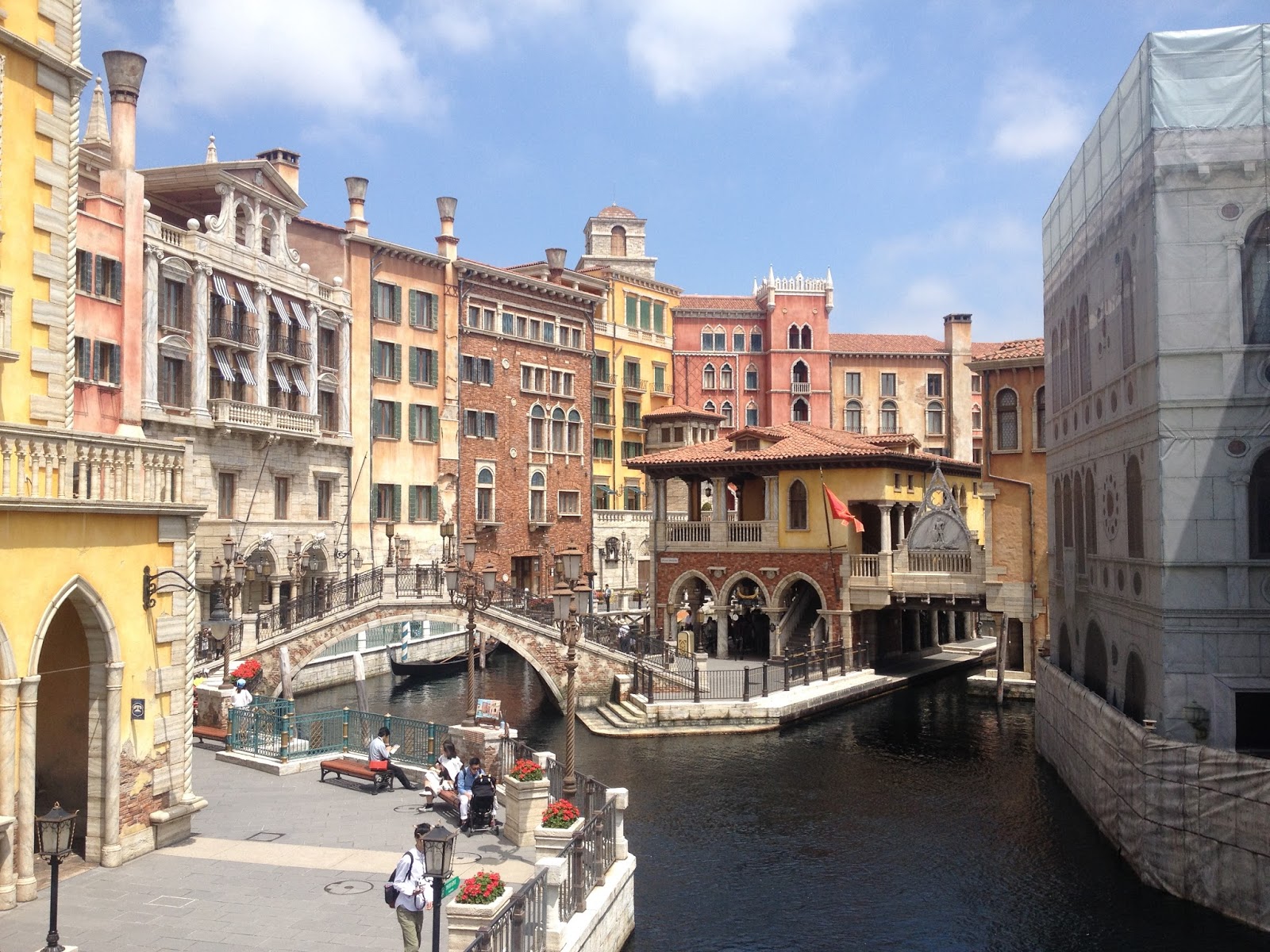
As I’ve said in a previous post, DisneySea is sea-themed, but not like a water world or anything. For example, there is an area called ‘Mermaid Lagoon’ with rides based on The Little Mermaid, and the entrance with the shops and restaurants looks like Venice, complete with gondola rides. It is regarded as more of an adult destination with rollercoasters, pretty facades and fancy restaurants.

DisneyLand on the other hand is more for children, with the classic “It’s a Small World”-esque rides and the pink fairy Castle. If you have ever been to DisneyLand in Paris, it is almost the exact same at Tokyo.

Food and Drink

You are allowed bring drinks and snacks into the park, but you’re not allowed full meals (they check bags on the way in, but I’m pretty sure you could get away with a lot of snacks). In restaurants prices are high, portions are small and lines are long, plus the excitement and running around all day can make you pretty hungry. 
The first twice I went I brought snacks with me and then forked over for dinner, but recently I decided to book the buffet. It was expensive (3,000 for 90mins), but they had a good choice of foods (Japanese and Western) and needless to say I was absolutely stuffed. The prices and portions of the regular restaurants and snack stands would add up to close to that and I still wouldn’t be quite satisfied. It was also a relief to know we would just be able to walk in and not worry about lines. While I didn’t regret going, in the future I would probably just bring my own snacks again.


Saturday, 16 April 2016

#122 Getting a Chinese Visa in Japan 2016

Japanese nationals don’t need a visa to visit China, so for foreigners in Japan it can be a mess to find out information. But, you will be relieved to know it is a quick and easy process.

In my experience, the lack of information combined with added cost and effort leads to many people visiting only Hong Kong – and while I’m sure it’s a great city, if you want to see the famous Panda Reserve or the Great Wall, then you will need to get a visa for mainland China.

So, here’s the necessary information;

You CAN apply by post, via a travel agency. It seems there was a time that the only way you could apply was going in person to the embassy in Tokyo – a very expensive and inconvenient option for most people, but this is definitely no longer the case.

All you need to apply is a passport, photo, copy of flight and hotel booking.

There are a few travel agencies who deal with visas, and you apply by printing out a form from their website and putting that, your passport, bookings, photo and money in an envelope via registered post. It generally takes less than one week for the passport to be returned to you.

Generally Japanese travel agencies (even big ones like JTB) will not help with a visa unless you buy your flights with them, but there seems to be enough agencies online that it shouldn’t be a problem (the problem is finding the right one for your area!).

If you Google it, the first website you will usually find is RTO, and you will also find a lot of people recommending them. The problem is they only work for those who live in the Southern part of Japan, as they apply through the Nagoya Consulate. Even though I live close to Nagoya, I still had to apply through Tokyo, so this agency isn’t an option for everyone.

I searched more forums and eventually found a company called Weston (wst.co.jp). They have processed visas for me and some of my friends so I can verify they are legitimate, and it should work for people living in the Tokai/Kanto (basically central Japan) area. Just remember to put in a self-addressed return envelope when you send it or you will have to pay another private courier on receipt of your visa.

The cost varies for different countries, for American’s you can get a 10 year visa multiple visit visa for 20,000yen, while I’m Irish and it cost 7,500 for just a one-time entry (Weston said on the website they don’t do multiple entries).


Overall, once you know what company to use it actually is a quick and simple process. While it is an extra cost and a little more effort than just going Hong Kong, the amazing photos of your trip to the Great Wall or backpacking around the many villages will make it more than worth it.


(Also note: I decided to change my hostel booking maybe 2 weeks before the trip. I totally forgot about the visa issue until on the plane when I had to state where I was staying on a form. I panicked and just wrote down the address I used on the visa form, the old hostel I wasn't staying in. I was a little worried there would be issues when I left or whatever, but there were no problems. 
I also met some Germans who intentionally did the same thing - they booked a hotel room for a refundable deposit, filled out the visa form and copy of the booking, then cancelled the hotel booking and stayed elsewhere. While I don't advise you to mess around with the Chinese Government, it's just to let you know it seems to be possible to change plans.....)