Pages

Showing posts with label japan. Show all posts

Tuesday, 20 September 2016

#141 Pokemon Center Tokyo 2016

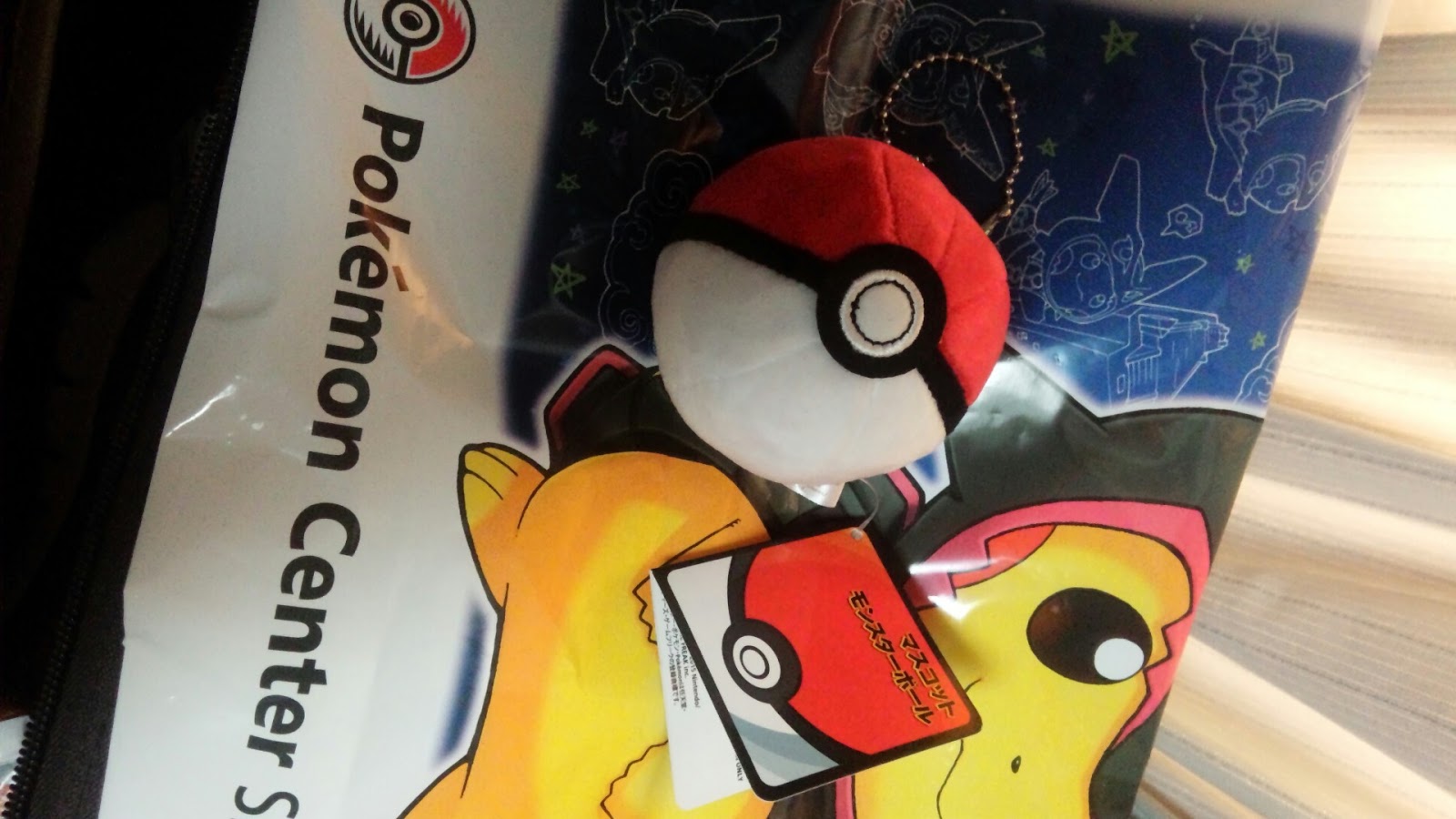
A few years back I wrote about my rather disappointing experience at the Pokemon Center in Tokyo. However, I went back at the end of last summer (in the height of the Pokemon Go craze!) to the newest Pokemon Center, located at a major attraction, Tokyo SkyTree.


I have to admit, there was a huge improvement. While it's still basically just a shop full of Pokemon goods, the difference was amazing. On my first visit the location in Minato ku, Tokyo, was little obscure (not so close to other attractions) and there were mostly goods from the newer generations of Pokemon aimed at the Japanese market (things like chopstick holders or little napkins to place your lunch on - not something particularly useful in the West!). I found I wanted to spend money, but had nothing worthwhile to spend it on.


Since I was in the neighbuorhood of Tokyo Skytree I found the brand new Pokemon Center, located the "Solamachi" - the big shopping complex at that houses the base of SkyTree. This time, I found I wanted to buy half the shop! There were absolutely tons of the first generation Pokemon found on stationery, soft toys, apparel etc. While the price isn't cheap, there should be something for everyone regardless of budget.

Pokemon, much like Hello Kitty, is one of the many quintessentially Japanese themed things many people think of. While I do think there are better ways to spend your time in Japan, and I whole heartedly recommend you to also check out places like Daiso (dollar stores) for cheap things with Pokemon and various Japanese characters on them, a visit to Skytree is worth it, and since you're in the area you might as well pop in!


Tuesday, 6 September 2016

#140 Cheap Japanese Souvenirs 2016!

I wrote a short post about this all the way back in October 2012, but since it's now one of my most popular posts on this blog I've decided to write an update here.

Daiso in Harajuku
So, having lived in Japan twice, I can now confirm the absolute best and cheapest place to look for souvenirs is at the Japanese dollar store equivalents - the most popular being Daiso, but there are tons of other chains and smaller stores that can offer other great products too (such as Watts and Seria).

All 100yen store prices are set at 108yen (including tax), with a very small selection of products 216yen or more (but they will be very clearly labelled as such, and the cashier will remind you when you checkout too so there's no surprises).

Maneki Neko (lucky cat)
Some of the great things you can buy here includes chopsticks, lucky cat statues, keyrings, Japanese fans, flags and head ties, green tea sweets, Japanese stickers, Japanese socks, fancy Japanese paper, traditional Japanese games etc. I've gotten so used to some common Japanese household objects that I don't even see them as special anymore so it surprised me when my sister visited and picked out some Japanese household items we don't have in Ireland to take home with her, so I'm sure you'll find something weird too! Some stores have more souvenir type goods and the best place in Tokyo for these is in Daiso in Harajuku, but all stores around the country will have something you can find to take home with you.

Japan is probably the most expensive country in Asia, and pretty far up the list in the world too, so buying souvenirs can really empty your pockets here if you're not careful. Therefore, the worst places you can shop is at any of the main tourist areas - sure they look great and they're better quality, but you will be paying up to ten times the price for similar items. Some of the worst tourist shopping areas in Tokyo are at Akihabara (the electric town) and the narrow street approaching Asakusa Sensoji Temple (the one with the giant lantern). I would say you should shop around at the 100 yen stores first, and if there's an item you absolutely must-have or need then splash out on that item there.

Obviously you are limited with 100 yen stores as you're not going to find a katana sword or kimono clothing or something more spectacular - but then my next piece of advice is to find a recycle store (second hand shop). These places will only take high quality goods so you can be sure of getting something decent, but then it may not be as cheap as some charity/second hand stores you're used to in your country. Another good place to look would be at flea markets, we accidentally found a very good one in Osaka at Shittenoji Temple and got some very cheap kimono (a little old and a little stained but this didn't bother us) but this is unfortunately only held about once a month so you would need to check the dates before you plan your trip.

Green tea Oero

Japanese paper

Japanese masks and flags

Japanese stickers
Japanese traditional games


Special goods for Rio Olympics


Tuesday, 26 July 2016

#135 I climbed Mt Fuji; What You Should Know July 2016

NOTE: I climbed the Fujinomiya trail, the second most popular trail, which is accessible from Shin-Fuji train station on the Shinkansen line. If you are planning on climbing the most popular Yoshida trail (accessible by direct bus from Tokyo) this information may not be so relevant.

Since this is a rather long post, I have broken it down into little sections covering a number of topics such as climbing times, altitude sickness, WiFi, prices etc. This was all my own personal experience (and occasionally compared with the experience of friends who have climbed it too) and I hope it's helpful for anyone looking to climb Fuji this year or in the future.


Off to a good start - some deer right at the entrance to the mountain


Climbing Times

The start of the trail from 5th to 6th station
I can reliably tell you it is a 9 hour climb up, and a 4 hour climb down. This is how long it has taken most of my friends to climb all through the night, and this is how long it took me to climb while sleeping over too. At Shin-Fuji there are many pamphlets and I took one which had estimated climbing times – which are absolutely ridiculous! It estimates 30mins each from station 8 to 9, 9.5 and 10, so 90mins total. This took me 4 hours, but I was going incredibly slow because I had altitude sickness so maybe 3hours is more accurate, but absolutely nowhere near the given estimation. If climbing to see the sunrise it will be similar because there are long lines of people, but when I climbed it wasn’t busy – it was just steep climbing and I was sick and tired.
It also estimates 2 hours to get from the summit back to the 5th station – I saw some people going down quite fast but it’s very steep and you’re very likely to slip and skid in a few places, and I even saw an old man who overtook me fall about 3 times – proving my theory that faster isn’t better if you want to get home in one piece.

Sunrise from the 8th station


Climbing Equipment

My backpack was really heavy, but I felt there wasn’t much I could do to prevent that since I had brought every essential I could think of. I could only manage about 2l of water in my backpack and another 500ml in a fannypack (great idea by the way, very convenient for phones, money, water, oxygen cans etc) so I inevitably had to pay a lot towards the top for more water, but I physically couldn’t carry any more with me so I guess just know your own weight limit.
It can get very foggy due to clouds but they quickly pass
If you go to my previous post you can see the list of all the equipment I brought. I will highlight hiking boots – I rented some from MtFujiRental.com (Kobe Outdoor) and it was a fantastic service all in English so I highly recommend their service. I have friends who climbed in regular sports running shoes and I even saw someone climbing in Converse, but I couldn’t imagine climbing without those boots. They gave me a strong, firm grip on the rocks both going up and going down, and I would really, really recommend you use hiking boots! (And they didn’t pay me to say that, I just genuinely think you need hiking boots and I can verify that’s a good place to get them!). You should also get the climbing stick, especially for the way down, even if you don’t want stamps or to try bring it home - my friend said she even just left hers in a bathroom because she didn’t want it! Since the Fujinomiya trail is the same route up and down it gets steep and slippery in places.


WiFi

Firstly, for all you Pokemon Go enthusiasts according to a friend who climbed a few days before me, there are some Pokemon but not any rare or exciting ones that she could see. If you have a Japanese phone (or rent a Japanese pocket WiFi or something) you should have full LTE (4G) coverage for 98% of your time on the mountain, and in fact I made a kind of Snapchat documentary of my journey. For tourists, there is free and easy to use public WiFi at all the stations, including the summit. I can’t reliably say how fast it is since I just used my mobile internet, but it’s there and it works (and most people who climb are Japanese and basically all Japanese phones are on contract with mobile internet, so the WiFi is unlikely to be congested with users). There are no chargers at any stations or cabins (even if you sleep over) so make sure to bring a portable charger!


Altitude Sickness

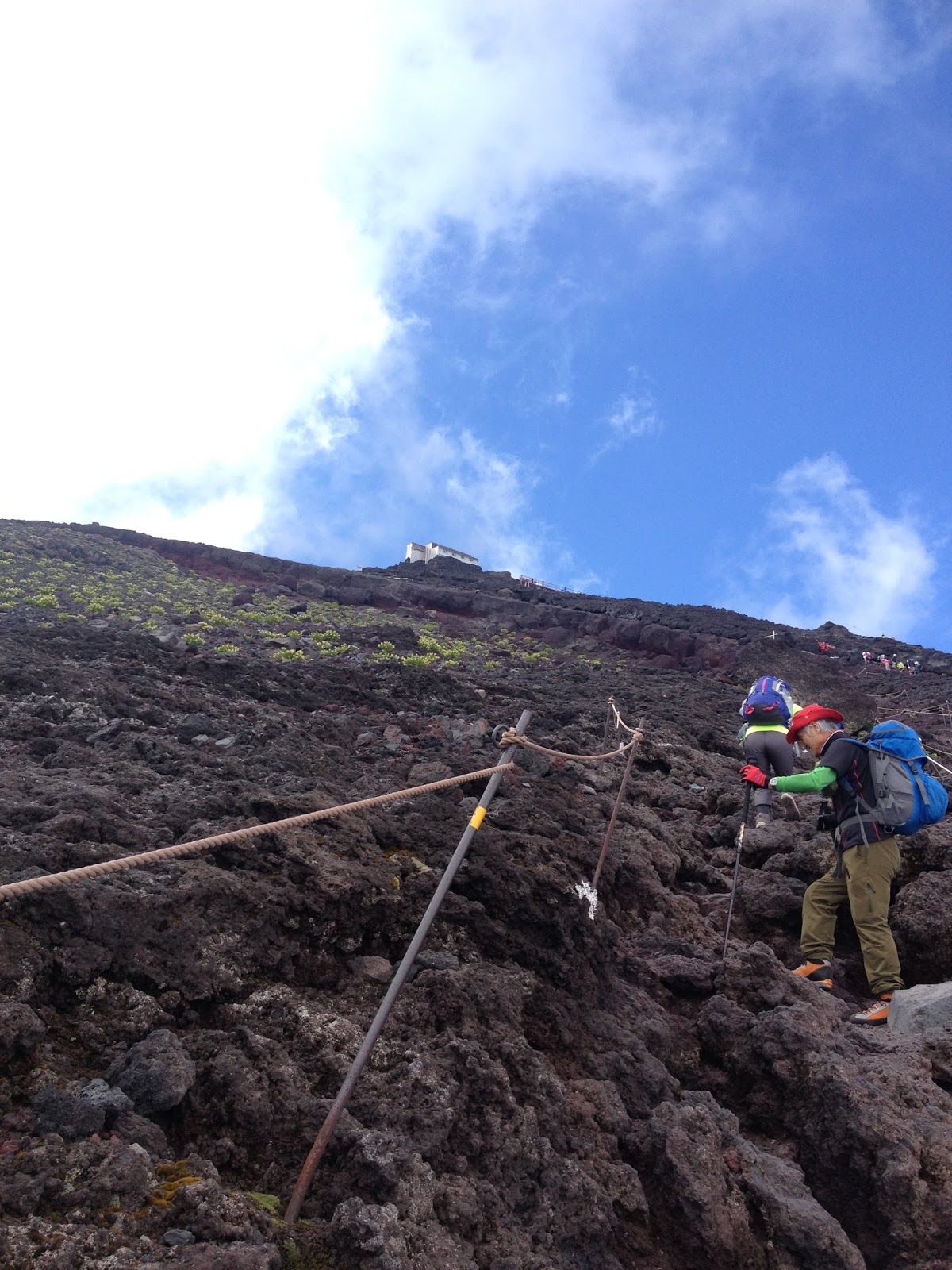
Heading up to the 8th station - it gets steep
So, I was sick. I knew it would happen, I didn’t want it to happen, I tried to prevent it happening – and still it happened. From what I understand my symptoms were moderate – not particularly severe but worse than “a little headache” some of my friends spoke of (although almost all said they were perfectly fine!). I walked up as slow as I could (considering I still needed to get to my cabin at 8th station before 6pm) and I drank water and I felt fine. and I also met people who had climbed much faster than me and were perfectly fine, so I was just unlucky.

A short time after I arrived at the 8th station I felt a headache coming on - I’m quite prone to headaches anyway so I had expected that much so I took a tablet and opened my oxygen. Then while trying to sleep about 2 hours later my headache got worse and I felt really nauseous. I had read absolutely everywhere on the internet and heard from friends in real life that the only cure is to go down the mountain, and since it was getting dark and I was alone and sick I began to panic about climbing in the dark, and the waste of money, and the shame of not reaching the summit - so in a mild hysteria I went to the cabin staff and said I was sick and needed to leave, but instead they took me to the mountain hospital, which was conveniently at that very station (this is the only hospital on the mountain so if you get sick at 9 or higher you’ll need to get back to here). 

Inside they gave me a ton more oxygen and had me fill out a form (English available) with some details like how I felt and my climbing information and my name and address – then it turned out the medical student assisting the doctor lives near my apartment and is a graduate of the school I teach at! So we spoke a little conversationally in Japanese which calmed me down and distracted me, and they gave me two tablets (I think one for headache and one for nausea) and also a 500ml oral rehydration solution (tasted like salty water). I’m not sure how good their English is since we spoke mostly in Japanese, but I have a feeling it was probably better than my Japanese actually.

At the end I was asked to give a donation, I could only afford 1,000yen since I was hoarding cash for more emergencies but I would have liked to have given them 10,000 yen if there was an ATM, however they thanked me and it seemed OK, I guess most people probably don’t have a huge amount of cash to spare anyway. So anyway after maybe 30mins I felt far better but still not great, so I went back to the cabin and I slept OK and felt fine by the time I got up (about 9 hours later). I hadn’t planned to see the sunrise from the summit, so I was fine with sleeping and resting a few more hours, and actually I saw it from the side of the mountain when I woke up to go to the toilet, so I guess it worked out fine! 

So the old adage of “with altitude sickness you have to get off the mountain” can now be proved untrue if you have some kind doctors to help, and also a lot of time to rest and get acclimatized! So that morning I set off for the summit, and despite having to deep breathe the whole way up and take a break literally every few steps, I actually managed to get there without feeling any more bad affects. Mountain hospital staff - I love you and thank you!

Sleeping Over


So I’ve touched on this in a few places already in this post. I stayed at Ikeda Kan at the 8th station, you can book online via their website (in Japanese but Google translate helps) and they do speak some English. It’s basically a room full of little compartments (ranging from 3 sleeping bags to around 8 or so maybe) and I felt it was nice and cozy. There’s WiFi but no electrical outlets so bring a portable charger. If you’re staying at a cabin the toilet is free but you’ll need to duck outside in some slippers (I think that’s how they know you’re a guest and not to charge you). 

I’d read somewhere online that the cabins are really cold, but coming in from outside it seemed warmer, and I just slept in my clothes and I woke up in the middle of the night in a sweat in my hoody - maybe it was because the cabin was full and the combined body heat of 250 people brought up the temperature, I’m not sure. 

The cabin staff put me in a compartment with 2 Canadian girls – so it seems they’re careful to put women/foreigners together. A few people were snoring, but since there was none directly beside me I found it actually kind of soothing. Come around midnight everyone will be stomping around and talking full volume almost constantly until daylight, while it was a little annoying I was too tired for it to bother me much – but make sure to pack your earplugs and eye mask! 

I would recommend this station as a good place to stop, I feel at 7 it’s still a little far from the summit, while it would have been very tiring to make it up to station 9. In climbing time, it’s about a little over the halfway point. Also, since I got altitude sickness it was really, really convenient to be at the station with the mountain hospital! I would just recommend sleeping over in general, I know it’s an extra 5,500yen ish that you could save, but it’s a fun experience and you get to relax at least for a little while before you climb to the top. 

At one point I woke up around 11pm to go outside to the toilets and I could see the moon shining brightly and the stars were all out, and below I could see many torches and flashes of lights as people climbed up. It was a really beautiful and special experience to see, and I have to admit I think climbing at night would be a special kind of experience too.


Ikeda Kan at the 8th station

At The Summit

So, despite there being signs everywhere on the mountain for the summit and signs at each station (in English, Japanese, Chinese and Korean) there is literally no sign in English at the top, at least not at the Fujinomiya station anyway! There is a shrine and some torii gates and a Japanese flag so it’s probably pretty obvious you’re at the top, but I was annoyed there was no definitive picture I could take and send to my family as concrete proof, since they obviously don’t know Japanese.
That's All Folks!

Anyway! While I was very tired, I was more eager to actually get down as fast as possible and get home to bed, than to relax on top like some people, so I took a few photos and decided to take a quick walk around since I had climbed for 9 hours and suffered immensely to get that far! 

On my quick walk I accidentally found the Mt Fuji post office, which I had totally forgotten about! Most of their sets are surprisingly cheap at around 500yen for a set anywhere between 2 and 5 postcards, and postage is included (although to a foreign country is a little extra, between 20yen-100yen depending on the size).

I opted for the certificate set, which had a B5 summit certificate (all in Japanese of course but Google translate does the job) and a regular postcard sized “Mt Fuji Summit Report” where I filled in weather, my climbing time etc, and I posted these to my family. They also have some cool ink stamps, and I was sad I had no other paper to stamp other than my postcards. Make sure to go to the post office before you head back down (but it’s only open from 6am to 2pm, making it even more special and elusive!) 
The Mt Fuji Summit Post Office


Atmosphere

By atmosphere I don’t mean like the altitude, I mean like the attitudes of everyone. I know they say Disneyworld is the happiest place on Earth, but Mt Fuji must be the friendliest place on Earth! I have never felt so welcome and met as many friendly people in a year in Japan (or maybe my whole life!) as I did in 24 hours on Mt Fuji. Everyone is joined together, aiming to complete the same task – reach the summit. 

From when I first started climbing at the very bottom I met many people coming down saying “Konnichiwa” and “Ganbate!” which mean “Hello” and like “Good luck/You can do it!”. Some even spoke a little English to me to ask where I was from, and it seemed to me like they were happy to have an excuse to talk to a foreigner and try practice some English. For example, on the way up the mountain I had a conversation with one woman who asked was I doing OK and was surprised I was climbing alone and told me to be careful, then the next morning I saw her again (she was coming down, I was still going up!) and she asked me again how I was, and I said I had been sick and she gave me some sweets and was very kind to me.

Since I know a decent amount of Japanese I would occasionally mention to people it was hot or cold or it was difficult, and they would be surprised and very friendly and congratulate me on my average Japanese level like I was fluent! I think if you could learn a few words like “Ganbate” the Japanese will be very appreciative and impressed with you!

Souvenirs

6th station - they all look pretty similar
Each station sells some stuff and the 5th station in particular has a huge selection of Mt Fuji stuff – western style souvenirs like keychains and fridge magnets , and also Japanese style omiyage like biscuits, chocolates etc. 

However, I didn’t buy any because about 80% of it is available throughout Shizuoka Prefecture  (the area where most of Mt Fuji lies) at train stations etc or even at regular souvenir stores in Tokyo, Kyoto etc etc, so there’s nothing special about them (except the knowledge that you know you actually bought it on the mountain). If you can manage it I think the most special thing would be a postcard sent from the summit of Mt Fuji, as I already mentioned above.


Money

So obviously there are no ATMs so you’ll need to bring a ton of cash. There is a 7-11 ATM at Shin-Fuji station which accepts international cards. I think you should probably bring like 10,000 more than you think you need – since if you need Oxygen it’s 2,000yen a can at the top, and I personally spent 2,000yen on four 500ml bottles of water. I also had that trip to the mountain hospital for which I needed a donation….

Anyway, it’s Japan and it’s incredibly safe to just leave your bag down and wander off to the toilet or take photos and come back again, no one is going to steal anything so don't be afraid to bring a lot of cash. Below is a list of some of the prices I saw while on the mountain.

A list of prices as of July 2016:

Voluntary Contribution:
1000yen

I think this was at the 5th station but I easily walked by and avoided it. Obviously you should pay since it goes towards preserving the mountain and environs, but it's easy to get away with it like I did.

Large hiking stick (with bells):
900yen at Shin-Fuji station
1,200 at station 6
1,000 at station 8

Getting my stick stamped
So it seems it’s cheap, then expensive, then cheap again further up the mountain. My friend said she didn’t really need it so much on the way up, but definitely on the way down to help prevent slipping, so you could put off buying one until closer the top, or grab one on your way down. The stick I got at Shin-Fuji station only had one stamp at the top, while I think the mountain ones had about 2 other stamps at the bottom too so be careful of this if you want it as a souvenir!

Stamps for walking stick:
200yen stations 6-9.5
300yen station 10

So actually I expected to pay more for the stamps for my walking stick. They were all only 200yen except at the top, but then I got a shrine pamphlet and also a little wooden prayer thingy (I don’t understand Buddhism so good). I was actually disappointed with the variety, each station only had one type of stamp.

Water:
100yen at Shin-Fuji vending machine
300 at 5th station
500 from stations 7 up

So I was expecting a gradual increase from like 200 to maybe 600yen closer to the top, but even from halfway up they charge you 500yen. There are no water fountains or any other ways to get water on the mountain, so unless you’re really strong and can carry like 4l with you, expect to just pay the money like I did.

Toilets:
100yen at 5th station
200yen stations 6 -9.5

So basically they’re all 200yen. The toilets are like a bio thing with no flusher….they're clean and have toilet paper but they all literally smell like horse/cow shit so if you’re feeling nauseous like me it’s not a great place to be! I didn’t need to pee that much, probably because I was using literally every nutrient or I wasn’t drinking enough….but anyway! Most huts had someone who you paid, but some were coin operated so you need exactly two 100yen coins (no 50yen coins for example). I didn’t go on the summit so it may have been a little extra. If you’re staying at a cabin the toilet is free.


Oxygen:
1,000yen for 2 cans at a Sports Authority store
1,500 at 5th station
1,000 at 6th station
2,000 at station 9

I’m not 100% sure of prices further up the mountain, but I definitely noticed oxygen being slightly cheaper at station 6 than anywhere else. You may not need it, but I got altitude sickness and even with my deep breathing techniques and a trip to the hospital at station 8 where I got even more, I still went through 2 cans and probably could have done with one more. You’re carrying air so it’s very light, so if possible try buy at least 2 in advance from a sports store or somewhere.

Sleeping overnight:
5,500 bed only (well…sleeping bag)
1,000 yen each dinner/breakfast

So I decided to go all out and get full board for 7,500 yen at station 8. I think the prices were all the same or very close except maybe 9.5 could have been a little more expensive. The dinner was curry rice (as expected) and although there wasn’t a lot it was just so nice to have a warm meal! However, breakfast was very disappointing for 1,000yen and I can assume it’s similar at all the huts so I don’t recommend it. It was given to me when I arrived – it was a Soy Joy energy bar, a chocolate croissant, an pan (bread with sweet red bean) and a little carton of milk that was lukewarm by the time I tried to drink it the next morning. I already had bread and energy bars in my backpack so I didn’t eat any of it. I had hoped it would be rice and miso soup (Japanese style) but I guess since everyone starts waking around 12 midnight for sunrise it would be difficult to organize. Anyway, treat yourself to dinner, skip the breakfast.

And good luck! If I can somehow manage to pull if off, you can too. Ganbate!

Sunrise from the 8th station

Thursday, 7 July 2016

#134 What the Locals Eat - Japan

Having lived in Japan for over a year, I am well versed in the Japanese art of dining out. When travelling I often find it difficult to find one particular restaurant out of millions that Lonely Planet has recommended - so let's be practical. I prefer to eat at chain stores and restaurants that can be found all over the country. Chain stores are easy to find and are plentiful both in Tokyo and across the country, saving you time and effort looking for a little local eatery where they don't speak English and you're completely overpriced.

Colorful chopsticks!
There a few key things you should know before embarking on your Japanese food journey, no matter where you decide to eat. The first, and most important, is this; everyone uses chopsticks and knives and forks are not available. Expecting to find a fork in a Japanese restaurant would be like a Japanese woman coming to Ireland and being shocked when she goes into Super Macs and finds there are no chopsticks. If you can’t use them, watch a few YouTube tutorials before you go, or carry around a fork when you go out for the day. Seriously.

As for language skills, outside the main tourist areas English is usually unavailable, but some menus have photographs and many restaurants have realistic plastic models of the food in the window, so worst case scenario you can always just point at what you want. In Tokyo ticket vending machines are in many restaurants to save time – you simply put in the money, click the picture that looks best, then hand your ticket to staff and your dish is delivered swiftly, without having spoken a word.
Otherwise, many chain stores have an English menu, or in the case of international chains the words have usually been adopted into Japanese and so sound very similar to the English (for example; a “hotto ratte” in Starbucks or a “cheezu baagaa” in McDonalds).

As a final piece of advice, Japan has a lot of unique flavors and varieties of Western foods (such as KitKats) and trying these is always fun, so if you have time pop into a grocery store and see what treasures you can find. Popular variations often include matcha (green tea) and wasabi (like green horse radish).

Below is a list of chain stores that can be found across Japan, as well as the food they serve and the prices to expect.


Breakfast

The Japanese word for breakfast – asa gohan – literally translates as “morning rice”, so there’s no surprise that rice, fish and miso soup are still the most popular choice for Japanese every morning. However, many tourists are shocked to learn the Japanese have a love of bakeries and sweet breads, and these can be a popular choice, especially at weekends.

Vie De France – An affordable chain bakery with everything from sweet churros and croissants to savory curry breads and a kind of bread with bacon and fried egg on top (the Japanese-French take on a breakfast roll?). Breads are around 150yen-350yen with coffee around 300yen.

Dennys – Despite the familiar name the American chain has a very different menu in Japan. However, this is a good place to try some of the breakfast sets including rice and soup (or you could just get the pancakes). The morning select set meals are about 800yen.

McDonalds – While not exactly Japanese, the menu is different to Ireland, with breakfast options such as a Chicken Egg McMuffin and something called a McGriddle, and a side menu of hash browns, apple pies or chicken nuggets. A set meal is about 400yen.


Coffee break

While not exactly known as a nation of coffee drinkers, café chains are very popular in Japan, especially in summer when locals and tourists alike escape the soaring heat and relax with various kinds of iced coffee.

Starbucks - Lovingly shortened to “Su-ta-ba” in Japanese, the notorious chain is possibly even more popular in Japan that it is in America, and there’s one (or two) to be found on every street corner. Unlike their American counterparts they always have some kind of unique seasonal drink limited only to Japan, for example a Cherry Blossom Latte in Spring and a Baked Cheesecake Frapuccino for Summer. Check out the menu when you’re in town to see what’s new. Prices are similar to home at about 500yen (they don’t include tax in their price list so it will be a little more expensive).

Tullys

Mister Donut – Another cultural surprise, the Japanese enjoy donuts. This chain is found in a few parts of Asia and is cheaper and has more selection than Krispy Kreme (although they win when it comes to seasonal decorations). I recommend the Pon De Ring – a unique Japanese kind of squishy donut. Look out for their 100yen sales, otherwise expect to pay around 140yen for a donut and 300yen for coffee (they boast unlimited refills of the delicious café au lait).

Tullys – This is a Japanese coffee chain, similar to Starbucks but with more luxurious drinks, and usually not as crowded. Prices are around 500yen.


Lunch

The Japanese are hard workers and as such keep their lunch breaks to an absolute minimum before returning quickly to work. Japanese lunchtime is at 12.30pm and it’s best to avoid eating at this time as everywhere will be insanely crowded for that one hour. Several restaurants have only a counter with stools to accommodate more solo diners and to facilitate a quick turnaround, so sitting together in groups of more than 2 can be tricky.

Sukiya
Sukiya – This is one of many gyudon chains in Japan, gyudon being a large bowl of rice with slices of marinated beef drizzled on top. While it doesn’t look so glamorous, it tastes good, is served to you within seconds and is probably the cheapest and most filling meal you’re likely to find in Japan. A regular bowl costs around 350yen, with miso soup usually being served free. (Other popular chains include: Yoshinoya, Matsuya).

Mos Burger – This is a Japanese burger chain that is regarded by the Japanese as more healthy and fresher than rival McDonalds – though how true this thinking is, I’m not sure. Regardless the burgers are big and the options are interesting than what you find at home. Try the classic mos cheese burger with a green melon soda and fries. Prices are around 800-1000yen for a set.

7-Eleven – Convenience stores are big business in Japan, opening 24 hours and found on every street. For lunch on the go, pop into any store (options include Lawson, Family Mart, Circle K) and grab some pan (bread) from their extensive collection, or act like a true local and grab an oni giri – a ball of rice covered in a sheet dried seaweed and containing some kind of fish in the middle – my favourite is the tuna mayonnaise. Wash it down with a bottle of Green Tea or a Fanta Grape. Breads and onigiri are around 100-200yen, and drinks are about 150yen.


Snacks

Gindaco – This place sells takoyaki which blatantly are “octopus balls”, but intricately are delicious, piping hot battered balls with a teeny tiny piece of octopus tentacle on the inside, served with tons of seasonings, mayonnaise and various unknown sauces. Be brave and give them a try, you’ll be surprised! A set of 6 is about 550yen.

Vending Machines – There are vending machines on every street corner in Japan, including streets in the middle of the countryside surrounded by nothing but rice fields. Unfortunately, about 98% of these sell only hot/cold drinks (the other 2% selling cigarettes) and to find one with food is a rare occurrence. The upside is that in the cold winter you’re always within reach of a hot tea or coffee, and in summer you can keep constantly hydrated. I recommend a hot can of Boss coffee to wake you up first thing, and an ice cold bottle of Pocari Sweat sports drink to keep you energized throughout the day. Drinks are around 110-180yen.


Dinner

Since Japanese often work late, dinner time is around 6 to 8pm, so it’s best to try get in before them as lines can be long. However, it’s usually more staggered than lunchtime.

Tonkatsu Wako – Tonkatsu is deep fried breaded pork, but you can also get katsu variations of vegetables or seafoods such as prawn. The real star of the dish is the tonkatsu sauce – like a blend of Brown sauce and Worcester but a billion times more delicious. Just trust me. This chain offers formal table service and all you can eat rice, soup and cabbage, but the cheaper and more informal Katsuya chain is just as appetizing. Prices here are around 1,100-1,500yen, and Katsuya is about 600-1,000yen.

Uobei
Uobei – This is one of Japan’s popular kaiten zushi chains where the dishes go round and you take what you like. Modern chains like this now also have a kind of tablet at every seat that allow you to order what you want, which is then freshly prepared and promptly delivered to you on a mini train. They also serve hot dishes like ramen and French fries. All plates (2 pieces of sushi) are 108yen each, expect to eat about 5-10 plates for dinner (although some salary men can eat up to 20+…).

Ippudo – One of the best ramen places, ramen of course being a big bowl full of noodles in a soup, generally topped with bean sprouts and a slice of pork. The trick is to slurp the noodles and soup loudly. A popular side dish is gyoza, similar to a spring roll and best doused in a mixture of vinegars and oils. Ramen is about 800yen while gyoza are about 400yen.

CoCo’s Curry House – If you can’t use chopsticks, this is the place to go. Curry rice is very popular in Japan and is typically found on every menu, regardless of the restaurant focus. As the name suggests it’s always some kind of variation of rice with curry sauce, this would be almost impossible to eat with chopsticks and so is always served with a spoon. CoCo’s has a lot of customizable options including degree of spiciness and ingredients – ranging from cheese to beef to squid. A plate will cost you around 550-800yen.


Sweet Treats

Marion Crepes – The popularity of crepes in Japan is yet another by-product of the Japanese fascination with France. Surprisingly, Nutella is very rarely an option and instead the most popular options include a wedge of cheesecake and a ton of whipped cream. The best place to get one is in Harajuku in Tokyo, where there are about six on the one small street. The basic crepes go for around 300yen, while the cheesecake options are closer to 600yen.

Taiyaki
Baskin Robbins – Known as “31 Ice” in Japan, the chain even has Halloween and Christmas themed ice-cream cups, thanks to the fact most of Japan only starts to get truly cold around December. For a Japanese twist try their matcha and anko flavors. A small double (which is pretty big) is 470yen, and on the 31st of each month it’s 31% off.

Food stalls – Found at temples or festivals and especially populous in Spring and Summer. Classic snacks include tai yaki - a fish shaped kind of waffle filled with custard or anko (sweet red bean), choco banana - a phallic looking banana on a stick covered in chocolate icing (sometimes pink or blue in colour), sprinkles and good for a giggle, kaki gori - a summer specialty consisting of shaved ice and syrup, perhaps best described as the Japanese cousin of a slushy. Expect to pay between 150-350yen for any of the above.


Friday, 17 June 2016

#132 Preparing to Climb Mt Fuji 2016

EDIT: To read about my climbing experience and for details on the Fujinomiya trail please check out my most current post here.


I currently live in Shizuoka Prefecture, which is the “Home of Mt Fuji” (although part of Fuji also lives in Yamanashi Prefecture too!). Since it’s nearby, I decided I had no excuse not to climb Fuji before I leave this summer.


Getting There

Firstly, there are English language tours for around 20,000yen departing regularly from Tokyo, so if you are a tourist I would probably recommend booking one of those for a totally hassle free climb. However, it’s not difficult to do it yourself, as there are daily buses to/from Tokyo all through the climbing season (check out Willer for bus information)
You can also reach the mountain by getting a Shinkansen to Shin-Fuji station, and from there a 2 hour bus.


When to climb

Fuji is only open from around mid July to early September. This short climbing period means it’s always busy. Weekends and basically most of August (from around 10th to 20th maybe) are particularly crowded, and it’s possible to wait in line to get to the summit, especially at sunrise when lines can become quite long. I’ll be climbing on a Sunday-Monday because of work restrictions, but ideally I’d have liked to climb mid-week.


Night Hiking or Sleeping Over?

l  Many people choose to hike through the night and reach the summit at sunrise. This is officially not recommended as it can cause more accidents since people are tired and sleepy, and also climbing quickly increases the likelihood of altitude sickness. Despite this, thousands climb at night every year and experience absolutely no problems, and it is a cheaper, easier and faster alternative to sleeping over.

l  I will be sleeping over, mostly because I am worried about altitude sickness and the detrimental effects on my poor fitness level. You need to reserve your space in the hut well in advance of your climb, especially at weekends and the middle of August. Unfortunately many huts still only take phone reservations, and only some speak English. This website lists all the huts on the Fujinomiya route, including information like prices and availability, as usual it’s just in Japanese but is very easy to Google translate. You can also find more basic information on all the routes on the JNTO website.

My mountain hut in 2016
So, you just reserve your place in good faith and pay cash when you arrive. The prices are around 5,500yen for sleeping and 7,500 including breakfast and dinner. Dinner is usually something basic and filling like curry rice, but I have no idea what to expect from breakfast (EDIT; It was bread and not worth the 1,000yen). Dinner is served until around 6pm, since many climbers sleep early and wake up around midnight and in the early hours to climb again in order to reach the summit for sunrise at around 5am.

The huts are in no way glamorous – you will be in a big room in a sleeping bag with 250 people on either side of you. There doesn’t appear to be much personal space and I’m a little concerned about the smell after everyone hiking all day – but I’m sure it’s all an experience! 


I booked the 8th station (Ikeda Kan) on the Fujinomiya route online via their website – it was in Japanese but I translated it and their confirmation email was in English, presumably because they saw my foreign name. This also leads me to believe that even huts that officially have no English are probably so used to foreigners that they can communicate at least a little.


Fitness Level

Everyone hears stories about children and little old ladies climbing Fuji every year. However, there’s a reason why the Japanese live so long – they are very active into old age, and these little old ladies are probably out doing calisthenics at 6am in the local park every day so it would be foolish to underestimate their fitness level and compare them to the average old ladies in your country.
Now, from what I hear Fuji is not a difficult climb – you don’t need specialist climbing equipment or a Sherpa to help guide you. However, it’s still a mountain and should be treated as such. Taking your time, sleeping over and carrying the appropriate clothing and supplies will make it much easier.


Route

There are five routes total, but to be realistic and save time I’ll only tell you about the two popular routes.
l  Yo shi da – This is the most popular route, probably due to ease of access from Tokyo. It is also the most crowded but has a large amount of facilities such as toilets, huts and stores. It starts from quite low down but the incline is reasonably gentle (for a mountain anyway).
l  Fuji no miya – This is the route I will be climbing (just because it’s nearest my house), and is accessed by Shin-Fuji station. It is the shortest climb to the summit, but it is steeper than Yoshida. My friends said that it took them about 8 hours climbing all night, taking long breaks too. The estimate is about 4-7 hours to climb up and half that to descend.


Equipment and Gear

You need to be prepared for cold weather; although it may be 30 degrees Celsius outside, by the time the bus drops you to the 5th station it's quite high up and already you'll feel a slight chill. If climbing at night be prepared for it to be especially cold. The weather is also said to be very changeable so raingear and a change of clothes is also advisable.
l  Renting: I found Kobe Outdoor (mtfujirental .com) was very useful – their website is modern, fully in English and they deliver to hotels/AirBnBs from 3 days before your climbing date so you have time to change sizes etc, and you can return them within 24 hours of climbing at a convenience store. I have ordered hiking boots from them, so I will update and let you know if they are as good as they seem! (EDIT; They are! Even delivered a day earlier. Great service).
l  Walking Stick – This costs about 1,000 yen and is available at all the stations. You can get it stamped for 200yen at each station on the way up and is a popular souvenir (although awkward to fit in a suitcase coming home perhaps…)
Here's a few other things you should definitely take with you;
l  Hiking boots + thick socks
l  Oxygen cans (available at the base stations but very expensive so buy in advance)
l  Sunscreen
l  Sunglasses + hat
l  Rain coat and pants
l  Thick coat
l  Thermal top + leggings
l  Hat + gloves
l  Headlamp (night hiking)
l  Eye mask + Ear plugs (if sleeping over)
l  As much water as you can carry - prices get to 500yen for 500ml from the 7th station...


Last summer I met a guy with incredible sunburn – turns out he was recently climbing Fuji at night and was so busy preparing his gloves and coat that he forgot that he would be climbing down the mountain in daytime in the height of Japanese summer….needless to say I learned from his mistake and sunscreen and a hat are top of my list!


More Useful Links

The famous sunrise - actually seen from the 8th station

Monday, 13 June 2016

#131 JR Pass June 2016

The JR Pass is a discounted railway ticket that allows for almost unlimited travel on trains (including the bullet train) in Japan for a set number of time, usually one or two weeks. It is only available to buy in advance outside Japan (either online or via travel agent) and it is for foreign tourists to Japan.

It is not for people who live/work in Japan. It is not available to buy in Japan.

A 7-day pass is about 29,000 yen and considering the return trip from Tokyo - Kyoto is 26,000 this pass can offer absolutely huge discounts. This is probably also why foreigners coming to Japan for work are so desperately blind to the fact it's unavailable to them. It's hard to accept that you have to pay regular Japanese prices and be bankrupted each train you take.

Anyway, since this is such a recurrent issue with so many people I thought I'd post about it again in case someone has missed it.


The hugely misleading headline of this article from April 2016 led many to believe that you can now buy the JR Pass in Japan.

But if they had actually read the article, they would have seen that what it actually says is “Japan Railways Group (JR Group) plans to make the value-for-money passes available to visitors....”. The key words in the sentence being plans and visitors.


So if you’re coming to Japan on JET or with another English teaching company/just to work in general/live here and do nothing, no you still can’t get the pass. 

And if you have people coming to visit, for now they still have to buy online in advance, and with my inside knowledge of Japanese bureaucracy it’s likely to remain that way for the foreseeable future.

Tuesday, 31 May 2016

#129 Hamamatsu, Japan

Hamamatsu is a city on the Shinkansen line about halfway between Tokyo and Osaka.

Ieyasu Kun at Hamamatsu Castle
It has a population of about 800,000 people. It is home to Japan's cutest mascot Ieyasu-Kun, and is famous for it's japanese eel unagi.

There are a number of attractions in Hamamatsu, the most apparent being the only skyscraper in Shizuoka Prefecture, Act Tower. For a small fee of around 500yen you can get a great view of all of Hamamatsu from the top.

Hamamatsu has a small castle, which was built by the famous shogun Ieyasu Tokugawa (who also inspired Ieyasu-kun!).

Hamamatsu is also sometimes known as the City of Music, and is home to the Yamaha world headquarters as well as a music museum.

However, most of the attractions are near a big lake called Hamana-ko.

About a one hour bus ride from the city, you can find many attractions such as Hamamatsu City Zoo, Flower Park, Kanzanji Onsen (hot spring), an amusement park, cablecar and boat rides.

One of the best times to visit would be during the Hamamatsu Festivall, which is held during Golden Week every year. There, at Nakatajima sand dunes, you can find different neighbourhoods take part in kite battles in the sky!

Hamamatsu has many hotels, so it is convenient as a hub for visiting other places in Western Shizuoka such as Kakegawa which has a castle and bird park, Kikugawa which is famous for it's green tea fields and Iwata which is home to the EcoPa stadium which hosts music concerts and sporting events.

Access

The Shinkansen from Tokyo takes either 1.5/2 hours and costs 7,700 for an unreserved seat. There is also a 4 hour highway bus from Shibuya/Shinjuku for 3,800 one way or 6,700 return.
From Nagoya Chubu Centrair Airport it's about a 2 hour direct bus for 3,200.
From Osaka it's either 1.5/2 hours and 8,400 for an unreserved seat.


View of Hamamatsu city from Act Tower