Pages

Monday, 14 January 2013

#26 Tokyo SkyTree - The World's Tallest Tower

Visible from pretty much everywhere in Tokyo, Skytree is a new attraction, having opened less than a year ago in May 2012. It stands at 634metres tall and is simply fabulous. I took many of my own pictures of it, but none can show you the sheer height of this building, so I've stolen one from the internet to help. Keep in mind that many of the surrounding buildings are skyscrapers.


It is more expensive than Tokyo Tower, with tickets costing 2000yen to get to the first and second floor, the Tembo Deck, and a further 1000 yen to get to the top floor, the Tembo Galleria. However, as it is Japanese you can guess that it is very efficiently run. You can book in advance or you can arrive on the day and get given a number and time at which to come back, I went on a Friday afternoon in early December and I was told to come back in less than 2 hours. There is a shopping centre with shops and restaurants so there should be enough to keep you entertained. If your wait time is more than 2 hours you could probably have time to walk to Asakusa (famous shrine with giant lantern and tourist shopping street, 15min walk from Skytree).

I came back at my designated time and although there seemed to be a big crowd, I stood in line for just under an hour before I bought my ticket. Similarly, the line for the elevator only took a few minutes. The elevator to the Tembo Deck takes about a minute, which is amazing! Also from there, to buy a ticket and get the elevator to get to the top should only have taken about 10minutes (when I went to Tokyo Tower I had to buy a ticket and wait for an hour to get to the top).


To sum up: Skytree is definitely worth the money and the effort, it was dark by the time I went up and the lights of Tokyo are beautiful, and I imagine on a clear day you could see very far indeed. Japan you've done it again!


Note: The day I went to Skytree, I was unfortunate (or fortunate?) enough to experience a quite substantial earthquake. Just as I got out of the elevator and walked across the room, I thought I felt it was moving somewhat, a little like being on a ship - an invisible movement that can only be barely felt. I thought that maybe the building was designed with a little movement in it with many people on it. . .but after a few moments I really felt it was moving and I looked around at the Japanese tourists around me, many of who also seemed to be looking around in slight confusion. Again within a few seconds it began to noticeably shake and I found it a little difficult to keep my balance, and it was at this point I realised it was an earthquake. I was beside a group of old Japanese women, and I said (in Japanese) that it was scary and asked was it dangerous, and they replied it was fine! After a few seconds it was over and everyone went about their business again. There was absolutely no shred of panic among the Japanese - earthquakes are common and I had experienced them before, but not one that big or on a building that high up! There were very few (or none that I could see) foreign tourists - they all seemed to be Japanese. After the quake the elevators were out of service for about 40mins - and this is my only issue - many announcements were made, but all the announcements were in Japanese. I could understand the words "elevator and escalator...safety..." and an unknown verb that ended in "no". Teamed with the fact that there were big lines for the elevators I could guess that for safety reasons they weren't running. As a foreigner this could have been a very stressful experience, I didn't know when they would be running again or if it was a serious situation. As all the other information is in Japanese and English, I was disappointed that in a time of emergency they neglected the foreign tourists.
From the JMA website, it was a level 5 for most of Tokyo


It was a really exciting experience though.

Sunday, 13 January 2013

#25 Blog Neglectarino

So I've neglected to update this blog. . . .sob sob! I came home from Tokyo almost a month ago on 21st December. Since I'm moving to Stockholm in 7 days, I thought maybe I should start summing up Tokyo and Japan in the coming days before moving on to a new country and topic.

Taken at Narita Airport on my way home - Luckily it flashes between both Japanese and English

Friday, 23 November 2012

#24 Japanese FOOOOOD

So all the Japanese eat is sushi, right? OH MY. You sir, have been misinformed. Food in Japan is wonderful. Really, really wonderful.

They have fish and beef and pork. They have rice and noodles. They have doughnuts and French bread. They have ice cream stores. They have green tea and cappuccino. They have burgers and pizza.

To summarise, Japanese food isn't just rice and raw fish.

In Tokyo, my favourite place is to eat is Chikara Meshi. You order from a vending machine (a total win for those with little/no Japanese), take a seat at the counter and get served quickly. It's also super cheap and delicious, and usually open 24 hours. They have different menu options depending on the location, but they all seem to have the standard curry rice and "gyudon" which is a bowl of rice topped with strips of fried beef or pork. . .It is super super yummy! A normal size of one of these will cost you 290yen, which is really cheap.

Tonkatsu is another great Japanese fried food that everyone should be made eat all the time. There's a chain called Katsu-ya that are quite cheap (700yen), and another called "Wako Tonkatsu" which is more expensive (1100 yen) but you get free extra servings of rice, miso soup and cabbage.
I've also come across Yayoiken, I'm not sure if it is a big chain store but it has a great selection at affordable prices (700-900yen), and also has free extra rice servings.

Tonkatsu! Behold the meal of Kings. . or is that Emperors?


If you want to try a Japanese burger, the natural option is Mos Burger. It's pretty good chain store and not too expensive, with a burger, fries and drink costing about 700yen.

There's McDonalds, which has the usual you expect plus lots of yummy extras that come and go with the season. I'm not sure about America, but that only happens very rarely in Ireland, while Japan seems to have a new menu item or special offer on every week. Burger King is the same kind of deal, but Denny's has a totally different Japanese style menu, so be warned! There are some Subway restaurants, but they weren't so common. I think the menu is more Japanese-orientated and therefore probably differs from the usual options, but you should probably check it out yourself!

The only McDonalds sign I ever saw in Japanese!

An 'ebi' burger (that's shrimp!) It was a bit bland but otherwise okay

As for sushi, it's actually not that common to find and can be expensive, depending on where you look. I've found quite a few though that have 105yen plates. On these plates you get 2 pieces of sushi. At first it sounds cheap, then it sounds expensive, but I think in general it works out pretty cheap, depending on how hungry you are I guess. I've found that 5 plates is usually more than enough for me, which could work out as cheap as 525yen, although I've seen men pile up as much as 15 plates (so maybe don't go for sushi if you're really hungry). The most common type of sushi restaurant is the one where you sit at a stool and the sushi goes by on a conveyor, and the price depends on the colour of the plate (eg.blue plate 105yen, red plate 180yen etc). There's also a version of this except you stand and eat instead, I like my comforts (like sitting) so I never tried this.


As for coffee and desserts, there's Mister Donut which is, as the name suggests, a doughnut shop. They all cost around 120 yen, and often have sporadic 100 yen sales. There's also many Vie De France bread shops which have savoury and sweet breads for around 150yen. The most common coffee shop I see is Doutor, but there's also plenty of a place called Becks, and the obligatory Starbucks. Baskin Robbins ice cream shops are quite common, but they're usually referred to as "31 Ice" in Japanese (because of the 31 flavours).

Mmmmmmm

If you want to get convenience store food, it's cheap and good! You can get little lunch box dinners for around 500 yen, and they'll heat them up for you if you like. You can also get corn dogs, which for me as an Irish person is a really typical American food. They have a broad selection of sweets and breads, usually for around 100-200 yen. There's also a selection of hot or cold coffees (sometimes in cans. .becuase that's just how the Japanese roll. . .go with it). They usually open 24/7 and the most common is 7-Eleven, but there's also plenty of Lawsons, Family Mart etc.

Spicy chicken balls and rice from 7-Eleven

If you don't speak Japanese it can be kinda scary getting food, but apart from the aforementioned vending machines, they are also displays in some restaurant windows. Then you can pretty much see a decorative selection of their food, so you can get a good idea of what's available without having a word of the language.

Plastic model pancake display in cafe window

You may have already heard, but vending machines are still really popular in Japan. In Ireland they're a dying commodity, but in Japan you can find at least two on every street corner. They are literally everywhere! However, the vast majority of the time they only sell drinks. I think I only ever saw one with food in it, and even then it looked like a breakfast bar kind of thing. There are also rumours you can get vending machines with weird stuff in it (like underwear. . .) but I can assure you I never came across any of those. You can however get hot drinks like green tea and coffee in these vending machines, which is kinda fun! Prices are around 120-250 yen.

So there you have it, a little glimpse of contemporary Japanese food! 

The Japanese are (from what I've encountered) really eager to help you, and while they will usually not have the best English, they're going to really try and understand what's going on. So I say whip out your Japanese phrase book, point and gesture, be patient, and everything will run relatively smoothly!

As for a disclaimer, I live in Tokyo and this has only been my own small experience. Somewhere like Tokyo obviously has a lot of Western food options because it is a big city with a large amount of foreign tourists and a lot of business ties with America, if you go to smaller areas or towns I imagine your options would be more limited to traditional Japanese food.

A small selection of pot noodles from the museum in Yokohama

#23 EARTHQUAAAAAAKE

There are earthquakes every day here in Japan, but it's not very often that you notice them, and they can be very localised. In the 3 months I've been here, I've only noticed two that were distinct earthquakes and not just the metro rolling underground or a truck going by.

One happened in the middle of the night. I awoke to a slight shaking, thought "Earthquake!!" and it was over.  The other one happened last night, which reminded me to write about it. I had just arrived home and sat down at the computer when I heard a kind of bang and felt a shake which at first I thought was someone just slamming their door. It took a second or two for me to think "Earthquake!!" and then it was over. It probably only lasted for five seconds.
I looked it up afterwards on the Japan Meteorological Agency website, and sure enough there was a level 2 seismic activity where I live. This is 2 out of 7, so it was far from remarkable. There are level 1s and 2s and a few 3s everyday.
Courtesy of the JMA website


I had to leave the office to go to a meeting one day, and after a few minutes on the train my colleague text to ask had I felt the earthquake, which I hadn't, as the train is always rocking anyway. He said that there was a definite shake for a few seconds and the office went quiet for a second, and when it was over there was a nervous laugh and a few moments of excited talk. It made me wonder how many others I've sat through while on a train and didn't notice.

If you're curious you can go here http://www.jma.go.jp/en/quake/ and see what recent earthquake activity is happening!

Tuesday, 6 November 2012

#22 Ginza (and crazy Japanese souvenirs!!)

So I was wandering around the streets of Tokyo one Saturday evening and I found myself in Ginza, the rich part of town.

This building is like the signature of Ginza


I'd be meaning to go for a look in Ginza, but since it was a little far out from where I live and I really can't afford to shop in Chanel it wasn't at the top of my list!

It is a nice place, and well worth a look, even at night with the flashy lights. There's every high fashion name you know, as well as a few you probably don't know (which makes them oh-so-exclusive). And not to mention a big Forever 21, H&M, Zara, and possibly the biggest Uniqlo I've ever seen.

It was also that bright on the inside


They also have a wonderful toy shop (one of the biggest in Tokyo I believe) called Hakuhinan Toy Park. The ground floor has a wonderful assortment with everything from Harry Potter Chopsticks to fake Sushi candles! The second floor has a big selection of plush toys and keyrings and things from both Western characters (Disney, Spongebob) and Japanese characters such as Totoro and Hello Kitty. From there up in turns into an actual toy store and is less exciting unless you are, in fact, a child.

Star Wars Chopsticks

Harry Potter Chopsticks

Samurai Sword Chopsticks

Japanese food phone/bag charms...the fish one was really big and heavy
Legs chopsticks

Sushi candle


Sushi pen!


He's sooooo cute!


 The Swarovski building was decorated fabulously, as well as having Hello Kitty items

The Chanel Fall collection


Being an expensive area, there isn't much in the line of cheap restaurants around the area that I could see, but I found a McDonalds off a side street though. On a Saturday afternoon the area is closed to cars so you can walk along the street. Nearby is the replica of one of the oldest stations in Japan, the old Shinbashi station, as well as the Advertising Museum, Tsukiji Fish Market and Hama Rikyu Japanese Gardens.

So, Ginza is a nice place to look at, but unfortunately not to shop at for most of us. If you have time to spare in Tokyo then you should pay it a visit, but if you don't there are better places to spend your time.

#21 Pokemon Center Tokyo

So I'd heard that the Pokemon Centre in Tokyo was a big let-down, but since I was in Japan I felt compelled to verify the rumours and decided to go there recently as part of a day out!

Located in Minato in Tokyo, the nearest station is the Hamamatsucho train station (3minute walk). This is also the closest station to Tokyo Tower (maybe a 15min walk), so you could do both in one day.

Not so fun?


I haven't watched Pokemon in like 8 years and I never played the games, so I am honestly not a huge fan, I will admit. However, I do like it and I was interested in going to check it out. It's a small shop, and doesn't have a great selection, I entered and left the shop in about 30 minutes. I went on a Sunday so it was pretty crowded too.

Once I entered the shop, I quickly realised I didn't recognize any of the characters except Pikachu. They had charmander outside but there were no toys or anything with him on it inside. The only toys were Bulbosaur and Meowth. Needless to say everything was expensive, but they didn't even have a good selection of anything either. As I found quite often in Japan, most things are aimed for Japanese people, and not Westerners. So they were plenty of phone charms (not even nice ones though!), as well as the little table cloths children use to put lunch on in school and things like that.

In the end I got a 100 yen packet of tissues with Pokemon Center on them (it was one of the very few things that actually mentioned Pokemon Center too! The Japanese need to work on their branding) and also I managed to find a Pokeball on a bottom shelf. The ball itself is hard plastic and opens in half to reveal some hard sweets and a Pokemon stamp. . .probably not worth the 500 yen but it was the one thing I was willing to buy. In Japan most souvenir and tourist type shops give you 2 bags, one to put your goods in and another as a souvenir, so I now have 2 Pokemon Center bags which in itself is pretty sweet too.

The bag was nice. . .and she gave me two!


So all in all, it probably was the let down people had said, but going there and expecting it to be terrible I actually found it was okay. I can say I've been there now, which is cool. So I wouldn't say don't go - just don't go out of your way to go either. If you only have a short time in Tokyo there are hundreds of places that are much better to spend your time! But if you find yourself with time to spare like I had, it's worth a little visit.

The shop itself is located really just across from the station in a high rise building. It's on the 3rd floor I think but they have escalators that take you straight up so you won't get lost. There's nothing really in the direct area of the Pokemon Center, so don't plan to spend more than an hour there, although for those who like nature there's a lovely landscape garden with a small 150 yen entrance fee just across the road.

They had koi fish and turtles in the pond!

Sunday, 21 October 2012

#20 Transport in Tokyo

To get anywhere in Tokyo, you have two options - the train or the subway. You could also factor in walking, bus and bike. But the first two are the ones you will use all the time. Car and taxi aren't options.

Here's some general info, as well as some hints and tips I've picked up:

Trains and Subways: 
Platform sign for the Yamanote Line around Tokyo.

There is one website you need, www.hyperdia.com
This website tells you how to get from one station to another, all you need to know are the names. It gives you different options, prices, and the timetables of the trains. Basically, it is a life saver and I use it all the time here.

Now, there are some things you should know. In Tokyo, everything is in English (including the platform signs and all the main trains have English signs and announcements for the next stop), so don't worry about that. Also, there is no such thing as a return ticket - everything is one way. This also makes it more expensive. And you should know the trains/subways aren't cheap. On a typical day going to and from any place will cost you about 1000yen.

The trains are cheaper, especially the JR ones (which are most of the ones around Tokyo). Tokyo Metro and the private subway lines always seem to be more expensive, so if you can, try get the trains for all or most of your journey.

The trains and subways run from around 5am - 12am. If you are caught without a train, there are hundreds of 24 hour cafes and restaurants on every corner you can just go into and sit down/sleep. I believe the Japanese are usually far too polite to come and wake you up.

The trains and subways aren't as crazy as you see on the internet, with a hundred people squished against the glass. Mostly. Weekdays from 7-9am is the only time you will see this, and I've been on these trains, and it is not a pleasant experience. Going home around 6-8pm is quite busy, but not near as bad as the mornings.
And don't worry about being groped - you probably won't be. I've been here two months and it's never happened to me or anyone I know, and talking to women who have lived here for years they say the same thing - it's not as common as the media would have you think.
Don't ever expect to get a seat. It is a rare and joyous occasion when this happens.

The Suica and Pasmo cards:
If you are going to be in Tokyo for more than a few days, I would recommend one of these. From what I understand these cards are both the same, but since I have the Suica card I'll give you more detail on that. Basically it is a type of credit card that's topped up with money, and then used to get the trains/subway. It is much easier and faster to just scan it as you go onto the platform than having to calculate fares and buy tickets each time. You can also use it to buy things at a lot of vending machines, as well as some supermarkets.

The Suica card cost me 2,000 yen, but this was with 1,500 yen on it to use, so really the price is only 500 yen, which is very cheap. It also gives you an option to put your name on it so it can be returned to you if lost (or they will give you a new card with the amount you had on the last card). I bought mine at a ticket machine in central Tokyo, although I am not sure if every station has these machines. Every station has machines where you can top up the card, and if there's a problem (such as you have no money left and the barriers won't let you leave. . .don't worry it happens often!) you can go to the help desk and they will sort it out. It's free to top up and use the card, so I'd see no reason for not having one (although my friend still doesn't, unbelievable!).

Car, bus, taxi. . . .
Driving in Tokyo is madness. Don't do it.
I've never gotten a taxi but they are supposed to be pretty expensive, and only to be used when you need to (such as if the train isn't running).
I've never gotten a bus either, but I always see them around Tokyo, so it definitely could be an option.
Bikes are pretty cheap here and you always see people cycling around the outskirts of Tokyo, not so much in the middle of the city. You can't put a bike on a train subway or bus though.


Walking
As with every city, you will walk until you can walk no more! Unless you're like some of the local girls and can walk comfortably in your six inch heels, comfortable shoes and blister plasters are a must. Crocs are very popular in Japan, especially during the summer, and now I know the reason why.

#19 Don't go here

Imperial Palace Gardens


This is the one place I've been to in Tokyo that was a total let down! The Palace is behind big walls and gates and surrounded by a moat so you can't actually seen anything.

I'd read about some bridge, when I got there I walked past it twice until I realised that was it. . . .it was nice but I wouldn't have deemed it worthy of particular attention!

Nijubashi bridge: just like any other bridge

I then went to the East Gardens, which also left something to be desired. The highlight was this, a big foundation of where a tower used to be. The rest of the garden consisted of gravel walkways with trees and bushes around, not so exciting!
It was pretty big, to be fair

If you walk towards the Palace from Toyko station, you will come across a lovely little park with stone seats and fountains. At the time I was there, there was actually a wedding going on in the little buidling there. The fountains change every few minutes and it was nice to sit there and watch them, but again I'd only recommend if you were passing through. 


Nothing spectacular, but nice all the same

And finally, the only other thing of importance I could find in the area was Tokyo station, and the famous Tokyo Station Hotel, which is being advertised everywhere since it has just been refurbished and reopened.

It's a nice building alright.

So to conclude, although free, a visit to the Japanese Imperial Palace should not be high on your to-do list on a visit to Tokyo.


#18 Shinjuku

Shinjuku
Japan's a big place like. . . .

This is a view from the Tokyo Metropolitan Government Buildings in Shinjuku. On the 45th floor there is a free observatory, open until 11pm. I went there twice, once by myself during the day, and again with my friends in the evening, and on both occasions the views are spectacular! The pictures really don't do it justice.

That's Skytree in the middle background

At night it's fantastic to see the lights


Also in Shinjuku is the red light district, or Kabukicho as it more commonly known. While the area has two big main streets filled with lots of cafes, restaurants and karaoke bars, once you go down the side streets it gets a little seedy.
Apparently it is one of the few places in Tokyo where if you are a man you can get mugged, and if you are a woman led into some dangerous situations. . . .I went there at around 5pm Saturday just as it was getting dark, and sure enough I was approached by an English speaking man who wanted to bring me to a Japanese school, coincidentally down some back street. . . I kept walking and told him next time, I had to meet a friend. He followed for a minute or so and then stopped. So my advice would be to travel in a group and keep your eyes peeled, if you do that you'll have a great time checking out some of the more interesting establishments.

It all looks nice and innocent here

Again at night, the signs and lights are amazing

This was my favourite 

Also Shinjuku has lots of shops, so it makes a good day out even if you intend to see no naked women! ;)

#17 Japanese Souvenirs

For a 2016 update please visit my more recent post here: Cheap Japanese Souvenirs

Although I live next to Tokyo, and work there most days, I haven't come across many souvenir shops! I mean you can buy lots of Japanese things that are cool and maybe you can't get in your country, but it's difficult to find shops that sell things like postcards and keychains, the usual Westerner souvenir! I found in many places the goods are often focused on Japanese tourists and not foreign travellers, so there are huge phone charm and biscuit selections but no fridge magnets or keychains! In addition, any souvenirs I have found aren't exactly cheap, and if I'm to bring things home for my family and friends at Christmas I need them to be a little more reasonable! So I'm on the hunt to find some of Tokyo's best souvenirs!

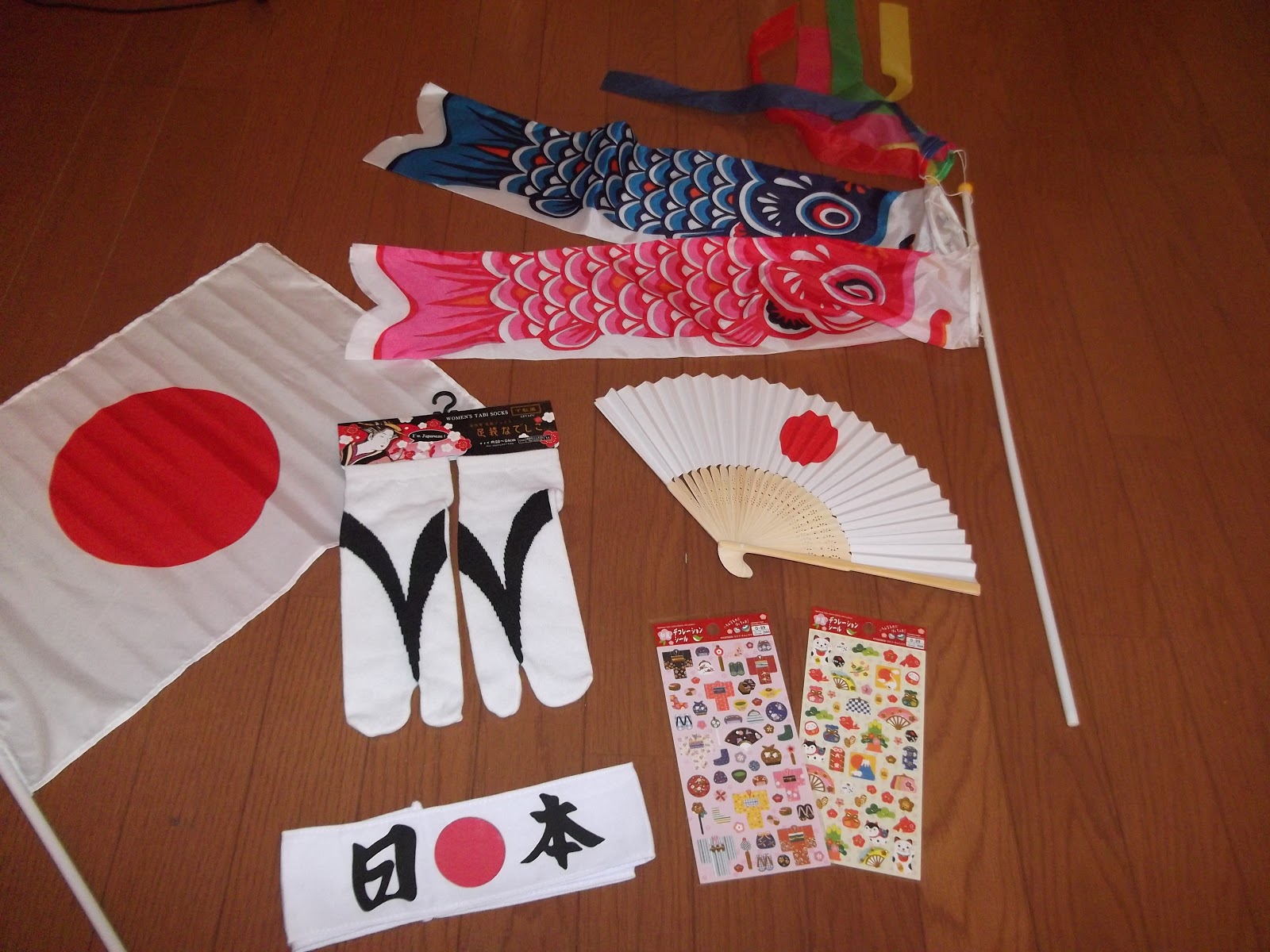
I went to Harajuku recently, and situated there is one of the biggest Daiso's (100yen store) in Tokyo. Although it seemed to have alot of what I've seen elsewhere, I did find some well priced souvenirs for 105-210 yen! Among these I bought two fridge magnets and a phone charm of a kokeshi doll, a japanese flag and fan, two packets of Japanese stickers, a Japanese headband, socks used for the traditional japanese sandals, and the carp flags used to celebrate Children's Day.

Here's some of my booty

I have also seen things like shot glasses, green tea pots and mugs etc in other Daiso shops, as well as other 100 yen shops. Sometimes you will find a wonderful selection in other 100 yen shops that aren't part of the Daiso chain. You can often get things with Hello Kitty on them (I got a rubix cube), as well as Doraemon, AnPanMan and Ultraman (all Japanese childrens characters). I've also found Disney items too. Most 100 yen shops have a food section, and here you can probably pick up pasta with Pikachu on the box, dried squid tentacles to frighten your friends, or some Hello Kitty themed chocolate!

Akihabara Electronics District also has some good tourist shops on their upper floors and basements. They aren't cheap, and be sure to shop around because you will easily find 500 yen difference in lots of goods between shops. Some of the items on sale here are "I love Japan" t-shirts, sake shot glasses, kimonos and yukatas, key chains, fridge magnets, fans, umbrellas, and lot's of other souvenir items! These shops also say things like "tax free" but you must have your passport, and it usually only applies if you spend at least 10,000 yen.
DonKi (in Shibuya, Shinjuku, Akihabara) has lots of weird Japanese items but I found it wasn't particularly cheap.

So, as a basic rule, enter every 100 yen store you see. You're likely to find something super cheap and really cool that will amaze your family and friends!

[Update: Head to Asakusa. There's a whole street there in front of the big shrine with nothing but tourist stalls and shops. Also see my blog post #21 Ginza and crazy Japanese souvenirs! for some Harry Potter and Star Wars Chopsticks and sushi candles!]

#16 Japanese Festivals

The key to having a blog is to update regularly, something I have been failing to do. And now, for an update on festivals.
Japanese Festivals:

A float from the Nebuta Aomori festival

Since I arrived in late August and am only staying until a few days before Christmas, I am caught in a festival dry season in Japan. All of the major festivals seem to happen just after Christmas, spring and then the summer. However, I seem to stumble across many smaller regional ones that happen here in Tokyo.

15th September 2012: One such was the Nebuta festival, which is from the Aomori region of Japan, although it is celebrated to a lesser extent in all around Japan, including Tokyo, where I went to the Nakanobu version. It was my first Japanese festival and it was wild - there were children, adults and elderly people all wandering around together in the most outrageous costumes (they looked like rags thrown on together). There were japanese drums and flute-like instruments and the little area was alive with music. The floats were made out of paper with a light underneath, like a giant lantern. I appeared to be the only foreigner there, and an old man actually asked to take a picture with me, which was sweet. He also gave me a little bell with ribbons on it to stick on my tshirt! He could speak English quite well and asked where I was from and what I was doing in Japan, etc.
Lady Gaga would be envious of this head gear

 One of the six floats

A woman playing one of the (really loud) drums

6th October 2012: I also stumbled across a festival in Kawasaki city, Kanagawa (the prefecture right beside Tokyo, only about half an hour away by train). I have no idea what it was called or why it was happening, and I was too chicken to use my petty Japanese skills to find out (I can successfully say what I want, it's just understanding the answer is the problem!). There were no floats when I was there, but there were lots of music and dancers, and I managed to get a few pictures. 

It was so Japanese-y

All the men came out shouting some chant and dancing crazy

This was a frantic, very jump-y dance!


20th October 2012; One of the more well known festivals, I went to the Kawagoe Festival in Saitama, north of Toyko. There were lots and lots of food and nick-knack stalls selling traditional Japanese food and sweets (as well as Western favourites like burgers and cotton candy). The highlight was the massive 3-tier floats being pulled by hoards of people (including me and my friend! A Japanese man we work with was a part of it and allowed us to pull the float, although there were so many people we really just walked beside it). On the floats there are dolls on top, and on the bottom people in kabuki masks dancing and playing drums. Generally the focus was more on the floats, unlike the previous festivals I went to that had alot of people dancing and playing instruments around the floats.


Up close

From far away

Towards the end, all the floats were brought near each other and a sort of "dance off" ensued